5 Signs Your 'Weight Loss Plateau' Isn't Actually a Plateau
Quick Answer: A flat scale for 1-2 weeks is rarely a true plateau — it’s more often water retention, measurement noise, or muscle gain masking fat loss; a real plateau needs several converging signs over multiple weeks before you should assume progress has actually stopped.
The number hasn’t moved in nine days and you’re ready to overhaul your whole plan. Check these five signs first — most ‘plateaus’ resolve on their own within another week or two.

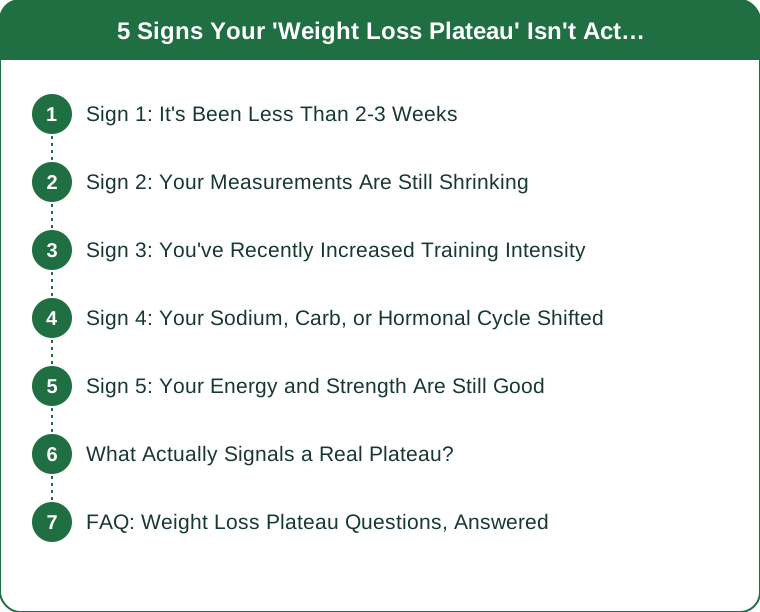
Sign 1: It’s Been Less Than 2-3 Weeks
Day-to-day and even week-to-week weight fluctuates from water retention, sodium intake, hormonal cycles, and digestion — none of which reflect actual fat loss. A true plateau needs at least 2-3 weeks of flat weekly averages, not a flat single week, before it’s worth troubleshooting.
Sign 2: Your Measurements Are Still Shrinking
If your waist, hips, or clothes fit are still changing while the scale sits still, your body composition is likely still improving — this is a classic sign of the scale lagging behind real progress rather than progress actually stopping.
Sign 3: You’ve Recently Increased Training Intensity
Starting a new strength program or increasing training volume can cause temporary water retention in the trained muscles as part of the repair process, masking fat loss on the scale for 1-2 weeks even while fat loss continues underneath.

Sign 4: Your Sodium, Carb, or Hormonal Cycle Shifted
A higher-sodium meal, a carb-heavier day, or the week before a menstrual cycle can each add several pounds of water weight that has nothing to do with fat. If any of these apply, a flat or even upward scale blip is expected, not a signal to panic.
Sign 5: Your Energy and Strength Are Still Good
If workouts still feel strong and energy is stable, your body isn’t in a stress response that would suggest metabolic adaptation — a true plateau caused by metabolic slowdown often comes with noticeably lower energy and workout performance too, not just a flat scale.
What Actually Signals a Real Plateau?
A genuine plateau shows flat weekly-average weight AND flat measurements AND no change in photos sustained across 3-4+ weeks, with adherence to your plan confirmed. That combination — not a single flat week — is what actually warrants adjusting calories or activity.
FAQ: Weight Loss Plateau Questions, Answered
How often should I actually weigh myself?
Daily weigh-ins averaged weekly give the clearest trend; a single weekly weigh-in is more prone to being thrown off by one bad day.
Should I cut calories further at the first sign of a stall?
No — wait for the full 2-3 week pattern to confirm a true plateau before making changes, since premature cuts often aren’t necessary.
Can stress cause a plateau even with good adherence?
Yes — chronic stress raises cortisol, which can contribute to water retention and make genuine progress temporarily invisible on the scale.
TL;DR:
- A flat scale under 2-3 weeks usually isn’t a real plateau
- Shrinking measurements while the scale is flat means progress is still happening
- New training intensity, sodium, and hormonal cycles all cause temporary water shifts
- Stable energy and strength argue against a true metabolic plateau
- Only adjust your plan once weight, measurements, and photos are all flat for 3-4+ weeks
Keep Reading
This article is for general informational and styling purposes only. Fit, sizing, and product availability may vary.