7 Reasons a Reset Built Around Two Meals Beats One Built Around Three
Quick Answer: Shrinking three meals leaves you mildly hungry three times a day, which is the state most likely to end a reset. Two substantial meals at the same total calories produce larger, more satisfying portions, fewer decision points, and better protein distribution at each sitting. It is not about meal timing magic — total intake still decides the outcome. It is about which structure you can actually hold for twelve weeks.
Every reset starts the same way. Same three meals, smaller portions, more willpower.
By Thursday of week two, the small lunch has stopped feeling like a meal, the 4pm gap has become a problem, and the plan is negotiating with itself.
The calories were probably right. The shape of the day was the thing that gave way — and shape is easier to change than willpower.

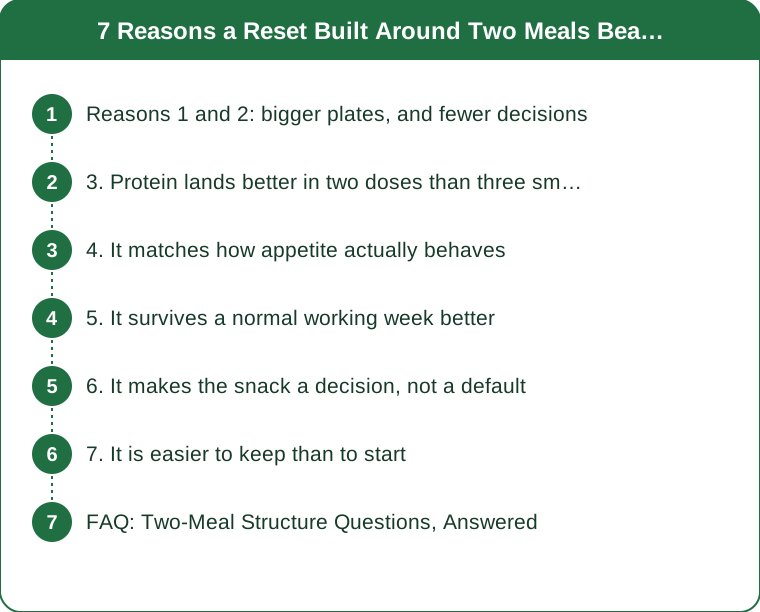
Reasons 1 and 2: bigger plates, and fewer decisions
1. Bigger plates beat smaller plates for satisfaction
Satiety is driven by food volume, protein content and the psychological sense of having eaten a meal — not by calories alone.
Split 1,800 calories across three meals and you get three 500-calorie meals with 300 left for anything else. Split the same 1,800 across two meals plus one snack and you get two 700-calorie meals — plates that look and feel like proper food.
The difference matters more than it should. A 500-calorie lunch of chicken, rice and salad is a modest plate. A 700-calorie version of the same meal is a satisfying one.
Nothing about the arithmetic changed. What changed is whether each eating occasion registers as a meal or as a compromise, and that registration is what determines whether you go looking for something else an hour later.
2. Fewer decisions means fewer chances to drift
Every eating occasion is a decision point, and every decision point is somewhere a plan can slip.
Three meals plus two snacks is five decisions a day, 35 a week. Two meals plus one planned snack is 21. That is 14 fewer opportunities per week for a reasonable-seeming choice to quietly add 200 calories.
This is also where the day tends to fall apart practically. Breakfast is usually the most rushed, least planned and most habit-driven meal, and it is disproportionately likely to be the one eaten out or grabbed.
Removing the hardest decision entirely is more reliable than resolving to make it better. That is not discipline; it is design.
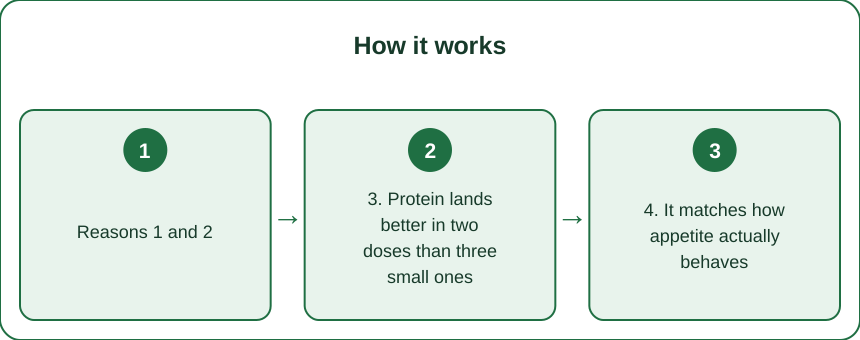
3. Protein lands better in two doses than three small ones
Protein distribution matters for muscle retention, and the threshold effect is real.
Muscle protein synthesis responds to a meaningful dose of protein — commonly cited as around 0.4g per kg of body weight per meal, or roughly 25 to 40g for most people. Below that, the response is blunted.
Three shrunken meals often deliver 20g, 20g and 25g — with two of the three landing under the threshold.
Two substantial meals more easily deliver 40g and 40g, both comfortably above it, with the snack topping up.
For anyone in a deficit, this matters. Preserving muscle is the difference between losing weight and losing the right weight.
4. It matches how appetite actually behaves
Most people are not genuinely hungry when they eat breakfast — they eat it because it is a meal time.
Appetite typically builds through the day, with the strongest hunger in the late afternoon and evening. Front-loading small meals into a period of low hunger, and then arriving at 6pm with a small dinner allocation, fights that pattern directly.
Two meals — a substantial late-morning or midday meal and a substantial evening meal — allocates the food where the hunger is.
The obvious caveat: this is a population tendency, not a rule. If you wake genuinely hungry and train early, a two-meal structure that skips breakfast is the wrong shape for you. Build around your actual hunger, not around someone else’s.

5. It survives a normal working week better
This is the practical argument and it is probably the strongest one.
A three-meal reset requires a controlled breakfast, a controlled lunch and a controlled dinner. In a normal week, at least one of those is eaten in a meeting, in a car, at a desk, or somewhere with no good options.
A two-meal structure has fewer exposed points. If your first meal is at midday, you have already navigated the morning without needing a compliant food environment.
It also handles the two situations that most often end a reset:
- A late meeting — you have not spent your allocation on a small lunch, so a later meal is not a problem.
- A social dinner — a two-meal day naturally leaves a larger evening allocation, so dinner out fits the plan rather than breaking it.
6. It makes the snack a decision, not a default
Snacking is not the enemy. Unplanned snacking is.
In a three-meal structure with small meals, snacks fill gaps reactively — you are hungry, so you find something. Reactive snacks are almost always chosen badly and rarely counted accurately.
In a two-meal structure, the single snack is allocated in advance: a planned 200 to 300 calories with a protein anchor, placed where the gap actually is.
Good candidates: Greek yoghurt, cottage cheese with fruit, a protein shake, or a small portion of nuts with an apple.
The distinction that matters: you are not eating less often out of restriction. You are eating on a schedule you chose rather than one your hunger chose for you.
7. It is easier to keep than to start
Resets fail at maintenance far more often than they fail at execution.
A three-meal reset ends by returning all three meals to normal size, which is a large simultaneous change with no structure holding it.
A two-meal structure transitions more gracefully. Maintenance means the same two meals, slightly larger, with the same rhythm and the same decision points. The scaffolding stays.
That continuity is worth more than any acute advantage. The strongest predictor of whether weight stays off is whether the structure that produced it is one you were going to keep anyway.
The honest framing: two meals is not metabolically superior. It is a structure that more people can hold for a year, and holding it for a year is the entire game.
FAQ: Two-Meal Structure Questions, Answered
Is skipping breakfast bad for you?
For most healthy adults, no. Meal frequency has little independent effect on weight when total intake is matched. The relevant question is which structure you can sustain and which supports your training and your day.
What if I train in the morning?
Then eat before or soon after training. A two-meal structure can just as easily be lunch and dinner with an early post-training first meal — the number of eating occasions is the point, not the clock.
Will I lose muscle eating twice a day?
Not if total protein is adequate — around 1.6g per kg of body weight — and you are resistance training. Two doses of 40g plus a snack covers this comfortably for most people.
Does this work with a family dinner?
It works well, because it concentrates your allocation into the evening meal you are eating with everyone else rather than requiring a separate small portion.
This is general information, not medical advice. Anyone with diabetes, a history of disordered eating, or who is pregnant should discuss meal structure changes with a healthcare professional.
TL;DR:
- Bigger plates satisfy better than three shrunken ones at the same total calories.
- Fewer decision points — 21 a week instead of 35 — means fewer places for a plan to drift.
- Two meals deliver protein above the per-meal threshold, which protects muscle in a deficit.
- It matches real appetite patterns, survives a working week, turns snacking into a planned decision, and transitions to maintenance without dismantling anything.
There is no metabolic magic here. There is just a shape of the day that more people can still be following in March, and that is what actually decides how a reset ends.
Keep Reading
This article is for general informational and styling purposes only. Fit, sizing, and product availability may vary.