6 Mistakes That Stall a Weight Loss Reset Before It Even Really Starts
Quick Answer: The most common reset-stalling mistakes are cutting calories too aggressively from day one, eliminating entire food groups at once, skipping any strength training, expecting daily scale movement, not planning for social situations, and ignoring sleep or last attempt’s breakdown point.
You’ve started strong before — motivated, organized, all the right snacks bought — and still ended up back at zero within a few weeks. These six mistakes are usually why.

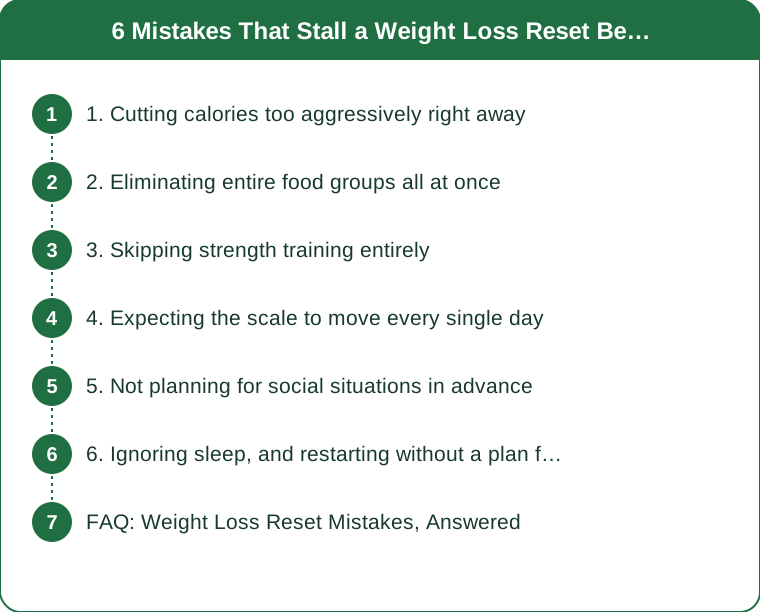
1. Cutting calories too aggressively right away
A steep initial cut feels like faster progress, but it increases hunger and fatigue disproportionately, making the first two weeks miserable enough that quitting becomes far more likely. A moderate, sustainable deficit holds up much better over the weeks that actually matter for results.
2. Eliminating entire food groups all at once
Cutting carbs, sugar, and processed food simultaneously in week one is a lot of restriction to maintain at once — phasing changes in gradually tends to stick better than an all-or-nothing overhaul that’s hard to sustain past the initial motivation spike.
3. Skipping strength training entirely
Many resets focus purely on cardio and calorie cutting, missing that resistance training helps preserve muscle mass during a deficit, which matters both for metabolic rate and for how your body looks as weight comes off, not just the number on the scale.

4. Expecting the scale to move every single day
Daily fluctuation from water, sodium, and hormones is normal and can mask real fat loss progress for days or weeks at a time — checking daily and expecting linear movement is one of the fastest ways to feel like the plan “isn’t working” when it actually is.
5. Not planning for social situations in advance
A reset plan that only works in a perfectly controlled kitchen falls apart at the first dinner out or holiday — having a rough plan for how you’ll handle social eating before it happens prevents an all-or-nothing derailment.
6. Ignoring sleep, and restarting without a plan for last time’s breakdown point
Poor sleep increases hunger hormones and reduces willpower for food choices the next day — treating sleep as part of the reset, not separate from it, meaningfully improves adherence to everything else in the plan. And jumping into a new reset with the same plan that already failed once, without change, tends to produce the same result — identifying the specific point where the last attempt broke down and adjusting for that is worth doing before starting again.
FAQ: Weight Loss Reset Mistakes, Answered
Is a moderate deficit really better than an aggressive one for a reset?
Generally yes for sustainability — aggressive early cuts often produce faster short-term loss but higher dropout risk within the first few weeks.
How much strength training is enough during a reset?
Even 2 sessions a week focusing on major muscle groups provides meaningful benefit for preserving muscle during a deficit.
Is it normal to fail at a reset more than once before it sticks?
Yes — most successful long-term changes follow several earlier attempts; the specific adjustment after each failed attempt matters more than getting it right the first time.
TL;DR:
- Moderate, sustainable calorie cuts hold up better than aggressive early restriction
- Phase in food group changes gradually rather than all at once
- Include strength training to preserve muscle mass during the deficit
- Plan for sleep and social situations as part of the reset, not afterthoughts
Keep Reading
This article is for general informational and styling purposes only. Fit, sizing, and product availability may vary.