6 Reasons Your Diet Reset Falls Apart on Day Four
Quick Answer: Day four is where novelty runs out, the initial water-weight drop stops, hunger hormones have adjusted to the lower intake, and the first genuinely inconvenient social or work event arrives. It is a predictable convergence rather than a personal failing. The fix is to design the plan around day four specifically: smaller deficit, more protein and fibre, a pre-decided plan for eating out, and no reliance on motivation past day three.
The pattern is so consistent that it is worth treating as a design problem rather than a character problem.
This blog has covered why a new week reset falls apart by Wednesday and why the first two weeks of weight loss are misleading. This is the specific anatomy of the failure point.

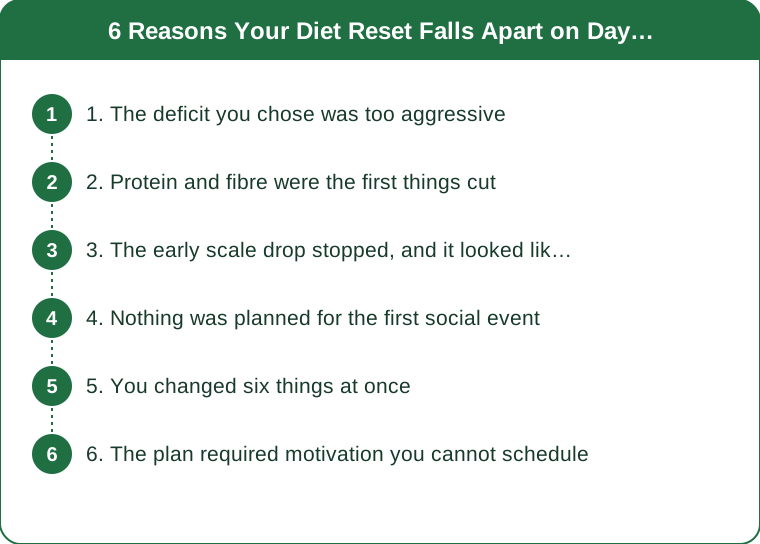
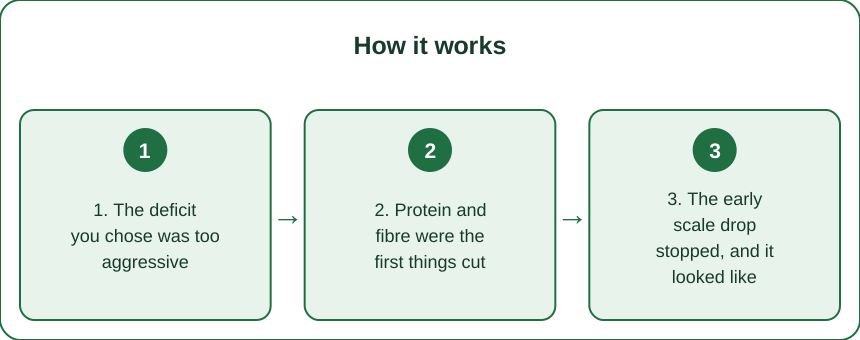
1. The deficit you chose was too aggressive
Most resets start with an intake that is not survivable past a few days. Enthusiasm at day one produces a plan that a well-rested, well-fed version of you agreed to, and by day four the version living it has a very different opinion.
A large deficit produces faster early results, which is precisely why people choose it, and it also produces hunger, fatigue, and irritability that accumulate rather than fade.
Aim for a deficit of roughly 300 to 500 calories a day. This produces steady, sustainable loss and it is small enough that you are not fighting your appetite continuously.
A sustainable moderate deficit maintained for twelve weeks outperforms an aggressive one abandoned on day four, by an enormous margin. The maths on this is not close, and it is the single most common mistake in the entire category.
2. Protein and fibre were the first things cut
Cutting calories usually means cutting portion sizes across the board, which cuts the two things that keep you full. Protein and fibre are the primary drivers of satiety, and reducing them makes the same calorie deficit far harder to tolerate.
By day four, the cumulative effect of feeling underfed at every meal has built up into something that overrides intention.
Keep protein at roughly 1.6 to 2 grams per kilogram of body weight even in a deficit, and aim for 25 to 30 grams of fibre a day. Both mean the same calories go considerably further in terms of fullness.
The practical version is to build every meal around a protein source and a high-volume vegetable, then fit the rest around it. This is a structural change rather than a willpower one, and it is the difference between a deficit you can hold and one you cannot.
3. The early scale drop stopped, and it looked like failure
The first few days of any reduced intake produce a rapid weight drop that is mostly glycogen and water. Each gram of stored glycogen holds several grams of water, and cutting carbohydrates releases both.
That drop stops around day three or four, and the scale flattens or even rises. It looks exactly like the plan stopping working, at the precise moment your resolve is weakest.
Expect it and plan for it. Genuine fat loss is a slow, roughly linear process of a few hundred grams a week, hidden underneath much larger daily water fluctuations.
Weigh weekly rather than daily, or use a weekly average if you weigh often. Daily weighing during the day-three-to-five window is the single most reliable way to talk yourself out of a plan that was working exactly as intended.

4. Nothing was planned for the first social event
Day four is statistically when the first unplanned eating situation arrives. A work lunch, a friend’s invitation, a bad day that ends with a takeaway. A plan built entirely around cooking at home has no answer to any of them.
The failure is rarely the meal itself. It is the conclusion that the plan is now broken, which converts one meal into an abandoned week.
Decide in advance what happens when this occurs. A specific rule such as eat what you want at the event, return to plan at the next meal, no compensation, removes the decision from the moment.
Also build in a planned flexible meal each week from the start. A plan with no allowance for normal life is a plan with a built-in end date, and adding the allowance deliberately removes the all-or-nothing collapse that follows the first deviation.
5. You changed six things at once
A typical reset involves new foods, new timing, tracking, more exercise, less alcohol, and earlier bedtimes, all beginning on the same Monday. Each is manageable and the combination is not.
Every simultaneous change draws on the same limited pool of attention and self-regulation, and by day four that pool is empty. When it goes, everything goes at once, which is why the collapse is usually total rather than partial.
Change one or two things and let them become automatic. Protein at breakfast for two weeks. Then add a walk. Then consider tracking.
This feels far too slow, which is exactly why people do not do it. It is also the approach that is still running in month three, when the six-change version ended on day four of week one.
6. The plan required motivation you cannot schedule
Motivation is high at day one and reliably low by day four. Any plan that requires daily enthusiasm has a built-in failure date, and it is roughly there.
This is not a character flaw. Novelty fades on a predictable curve, and building a plan that assumes otherwise is a design error.
Build systems that work when you cannot be bothered. Prepared food in the fridge, a default meal you do not have to think about, a shopping list that repeats, and a removal of tempting options from the house.
Lower the bar for a minimum acceptable day. Define what counts as staying on plan on a bad day, and make it genuinely easy. Hitting a low bar on day four keeps the streak alive; missing a high one ends it.
One note worth adding: if repeated resets are a persistent cycle, or if eating feels genuinely out of control, that is worth talking to a professional about rather than redesigning alone. This is general information, not medical advice.
TL;DR:
- Day four is where novelty ends, the water-weight drop stops, hunger adjusts, and the first social event arrives, all at once.
- Use a moderate deficit of 300 to 500 calories, keep protein high, and aim for 25 to 30 grams of fibre.
- Expect the scale to flatten around day three or four, and weigh weekly rather than daily.
- Decide in advance what happens at the first unplanned meal, and change one or two habits rather than six.
Build the plan for the version of you who exists on day four, not the one who exists on day one.
Keep Reading
This article is for general informational and styling purposes only. Fit, sizing, and product availability may vary.