7 Reasons a Reset Built Around Your Schedule Beats One Built Around Your Goal
Quick Answer: A goal-based reset specifies an outcome and leaves the logistics to future you, which is why it survives easy weeks and dies in busy ones. A schedule-based reset starts from the week you actually have - the late meetings, the school run, the two nights you get home at nine - and builds the plan into those gaps. It looks less ambitious on paper and finishes far more often. Plan for your worst day, not your best one.
The plan was five workouts and home-cooked dinners. Then Wednesday happened.
Wednesday happens every week. That is the part the plan should have started with.

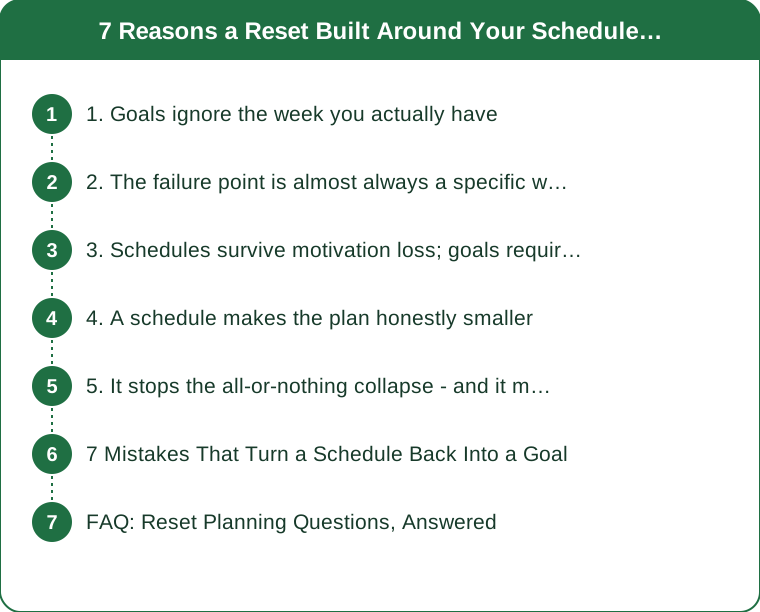
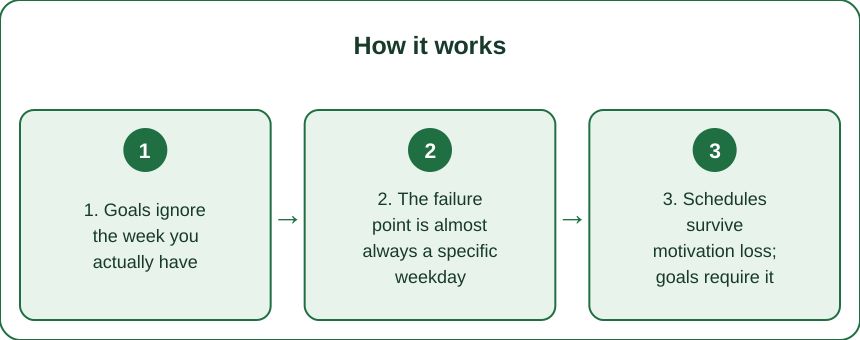
1. Goals ignore the week you actually have
A goal describes an endpoint; a schedule describes Tuesday. Only one of those is where the plan is actually executed.
Most reset plans are written on a Sunday, which is the least representative day of the week - more time, more calm, more optimism than any weekday will offer.
Write down your actual next seven days first, hour by hour, before deciding anything about food or training. The plan then has to fit into real gaps.
You will usually find three to four genuine windows, not the six the goal assumed. Building for four and hitting four beats building for six and hitting three.
And the exercise takes about ten minutes, which is the highest-return ten minutes in the whole reset.
2. The failure point is almost always a specific weekday
Ask anyone whose reset collapsed and they can name the day. It is rarely a general loss of motivation - it is one recurring evening.
Late work nights, the commute home after a long shift, and the evening with a standing commitment account for most of it.
A goal-based plan treats that night as a lapse. A schedule-based plan treats it as a known constraint and gives it its own solution - a specific fifteen-minute option, a specific meal that requires no cooking.
Pre-deciding that one night is worth more than optimising the other six, because the other six were never the problem.
Look at your last three attempts and find the shared day. It is usually the same one.
3. Schedules survive motivation loss; goals require it
Motivation is highest at the start and lowest around week two, which is precisely when the plan needs to run on something else.
A scheduled action is a decision you already made, so week-two you only has to execute rather than choose.
Anchoring to an existing fixed point works better than a clock time - after the school drop-off, before the first meeting, straight after the commute - because those already happen reliably.
Clock-based plans drift when the day drifts. Anchor-based plans move with it.
And the anchor should be something that happens even on bad days, which rules out most morning routines for anyone with unpredictable evenings.

4. A schedule makes the plan honestly smaller
Written against a real week, most plans shrink - and the shrinking is the useful part.
Three sessions completed beats five sessions planned, both for results and for the far more important matter of whether you are still doing this in November.
The same applies to cooking. Two cooked dinners and three assembled ones is a plan that survives; five cooked dinners is a plan that ends in takeaway on Thursday and a sense of failure on Friday.
Smaller plans also leave headroom for a bad week, which every eight-week block contains.
And a plan you have beaten for three straight weeks builds something a plan you keep missing cannot, regardless of what the numbers say.
5. It stops the all-or-nothing collapse - and it moves with the season
It replaces a verdict with a hit rate
Goal-based plans have one state: on track or off it. Miss two sessions and the week reads as failed, which makes abandoning it feel rational.
Schedule-based plans have slots, and a missed slot is a missed slot rather than a verdict on the whole project.
Build a named minimum version of each slot - the ten-minute walk that counts, the yoghurt-and-fruit dinner that counts. Naming it in advance is what makes it feel like a choice rather than a concession.
Aim for a hit rate, not perfection. Four of six slots is a good week and should be recorded as one.
And a written record of hit slots is far more motivating than a scale, because it moves every single week.
6. And the schedule changes with the season
Late August and early September change the week structurally - school terms restart, work rhythms tighten, and evening daylight starts disappearing.
An evening walk that worked in July stops working when it is dark at seven, and that is a scheduling problem with a scheduling answer: move it to lunch.
Autumn is genuinely a better reset window than January for most people because the schedule is stabilising rather than recovering from disruption.
Rewrite the schedule when the season changes, not when the plan fails, and expect to do this three or four times a year - normal maintenance rather than starting over.
7 Mistakes That Turn a Schedule Back Into a Goal
Writing the schedule on your best day. Sunday morning you has more time and more optimism than any other version of you. Draft the plan, then reread it on a Wednesday evening before committing.
Scheduling by clock time instead of anchors. ‘6pm workout’ breaks the first time a meeting overruns. ‘Straight after I get home, before I sit down’ survives it.
Leaving one night unplanned because it is difficult. The difficult night is the one that determines the outcome, and it needs the most specific plan, not the least.
Not naming the minimum version. Without a defined smallest acceptable action, every disruption becomes a full skip.
Planning food and training separately. They compete for the same evening hours. A plan that schedules a workout and a cooked meal into the same ninety minutes has already failed on paper.
Measuring the wrong thing weekly. Tracking weight weekly during a reset shows mostly water. Tracking slots completed shows the behaviour you are actually building.
Refusing to revise it after week one. The first week is data collection. A schedule that has not been adjusted after seven days is being defended rather than used.
FAQ: Reset Planning Questions, Answered
Should I set a goal at all?
Yes - one, kept in the background as direction. The weekly plan should be built from your calendar, not from the goal, and reviewed against the calendar rather than the goal.
How many sessions should a realistic reset include?
Whatever your actual week has room for, which for most people is three or four rather than five or six. A completed three beats a planned five.
Why does week two feel harder than week one?
The novelty has gone and the first real scheduling conflicts have arrived. This is exactly when a pre-decided schedule outperforms motivation.
What if I miss two days in a row?
Go to the next scheduled slot. Missing consecutive slots means the schedule needs adjusting, not that the reset ended.
Is autumn a good time to reset?
For many people it is better than January - the schedule is stabilising as term and work rhythms settle, which is exactly what a schedule-based plan depends on.
How do I know it is working before the scale moves?
Count completed slots. Behaviour changes weeks before body composition does, and it is the only thing that moves fast enough to steer by. This is general information, not medical advice.
TL;DR:
- Goals describe outcomes; schedules decide whether the work happens.
- Write your real seven days first, then fit the plan into the gaps that actually exist.
- Nearly every collapse traces to one recurring weekday - plan that one specifically.
- Anchor actions to existing events rather than clock times so they move with the day.
- Name a minimum version of every slot so disruption does not become a full skip.
- Track completed slots weekly, not weight - it is the number that actually moves.
Plan for your worst day. The good days were never in danger. This is general information, not medical advice.
Keep Reading
This article is for general informational and styling purposes only. Fit, sizing, and product availability may vary.