7 Reasons Your Reset Fails at the Grocery Store, Not in the Kitchen
Quick Answer: What is in your kitchen sets the ceiling on what you can eat, and that is decided in a 40-minute shop rather than in seven separate evenings of decision-making. Shopping with a list, after eating, with a plan for exactly how many dinners you need, removes most of the week’s failure points before they exist.
You did not lose the week on Wednesday night in front of the fridge.
You lost it on Sunday at 5pm in aisle six, hungry, without a list.

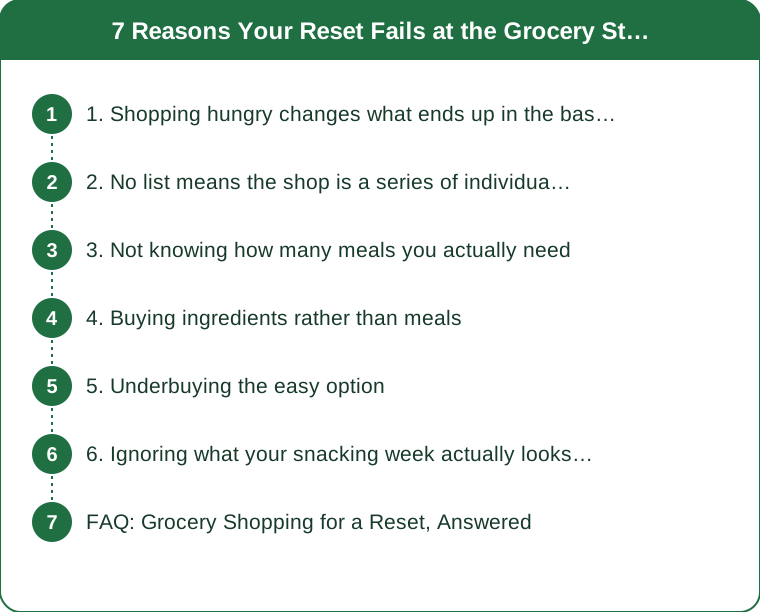
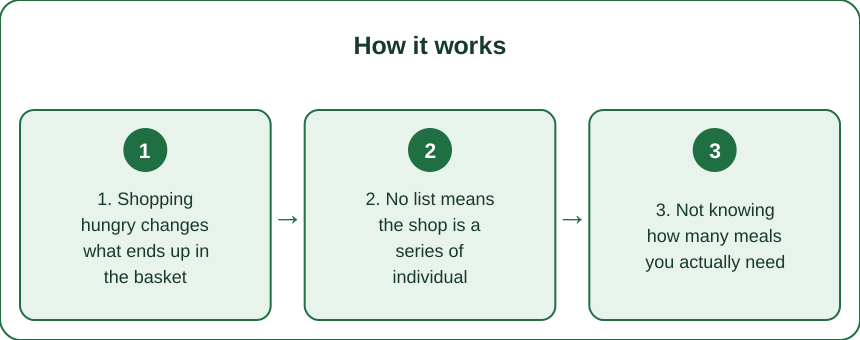
1. Shopping hungry changes what ends up in the basket
Shopping while hungry reliably increases both total spending and the proportion of high-calorie convenience food. The effect is well documented and it is larger than most people believe of themselves.
Eat something before you go. A snack with some protein twenty minutes beforehand is the single cheapest intervention on this list, and it changes the contents of the basket more than any amount of resolve at the shelf.
2. No list means the shop is a series of individual decisions
Every aisle without a list is a fresh choice, and decision quality degrades across dozens of small choices. By the end of the shop you are choosing worse than at the start.
Write the list by meal, not by food. Four dinners, three lunches, breakfast for seven days. A list organized by meal tells you what you actually need; a list of foods tells you what you like.
3. Not knowing how many meals you actually need
Most people shop for seven dinners and eat four at home. The other three become waste and the shop was 40 percent larger than necessary — which is both expensive and a reason the fridge stays full of things going off.
Count the week’s real dinners before you go. Look at the calendar. Two nights out and a late meeting means four dinners, not seven, and the shop shrinks accordingly.

4. Buying ingredients rather than meals
A basket of excellent individual ingredients is not the same as a plan. Chicken, broccoli, and rice bought separately without a specific meal in mind frequently become nothing at all on a tired Tuesday.
Buy in complete meals. Each dinner should be a protein, a vegetable, and a carbohydrate you can name together. If you cannot say the meal out loud in the aisle, it will not get cooked.
5. Underbuying the easy option
Reset plans usually contain only the ideal version of every meal. Then a night arrives with no time and no energy, and there is nothing in the house that fits, so the takeaway app opens.
Deliberately buy two genuinely easy meals. Frozen vegetables, pre-cooked protein, a decent jar sauce. Not a compromise on the plan — a designed component of it, for the night the plan meets reality.
6. Ignoring what your snacking week actually looks like
People shop for meals and eat snacks. If the plan has no snacks in it, the snacks come from wherever is nearest at 3pm, which is rarely aligned with the plan.
Buy the 3pm snack on purpose, in the right quantity. Fruit, yogurt, nuts portioned out, or a bar you have actually chosen. Planning the snack is not a failure of discipline; it is planning for something that happens every day.
7. Shopping for the person you intend to become
The basket full of unfamiliar vegetables and ambitious recipes belongs to a version of you with more time than you will have on Thursday. That produce goes off and the failure feels personal when it was logistical.
Change one or two items per shop, not the whole basket. A reset that lasts is built from foods you already cook, adjusted at the edges. The dramatic shop is a strong predictor of a week that collapses by Wednesday — and this is the mistake that repeats most, because it feels like the most committed version of trying.
If you have a history of disordered eating, structured shopping rules can become their own pressure — work with a professional rather than tightening the system. This is general information, not medical advice.
FAQ: Grocery Shopping for a Reset, Answered
How far ahead should I plan the shop?
Enough to count the week’s actual home dinners — usually a five-minute look at the calendar the night before. Detailed meal plans two weeks out tend to collapse on contact with a changed schedule, while a rough count of how many dinners you genuinely need is robust.
Is online grocery shopping better for sticking to a plan?
Often yes. It removes the hungry-in-the-aisle effect entirely, makes list-based shopping the default, and lets you see a running total. The trade-off is less flexibility on fresh produce quality and a delivery slot that has to fit your week.
What should I do about the rest of the household?
Shop for the shared meals together and keep the differences at the edges — your snack, their snack. Trying to change everyone’s food at once turns a personal reset into a household negotiation, which is a much harder project and a common reason resets stall in week two.
TL;DR:
- Eat before you shop and go with a list organized by meal rather than by food.
- Count the week’s real home dinners first — most people shop for seven and eat four.
- Buy two deliberately easy meals and the 3pm snack on purpose; both are planned components, not compromises.
- Change one or two items per shop instead of transforming the whole basket.
The kitchen can only offer what the shop put in it. Forty minutes on Sunday decides more of the week than seven evenings of willpower ever will.
Keep Reading
This article is for general informational and styling purposes only. Fit, sizing, and product availability may vary.