7 Reasons Your Reset Should Start With Sleep, Not Food
Quick Answer: Short sleep raises appetite hormones, increases cravings for energy-dense food, reduces the willpower you need for every other change, lowers training quality, and shifts the composition of any weight you lose toward lean tissue. Fixing sleep first makes the food changes easier rather than competing with them.
You have started a reset four times this year and each one began with a shopping list. Here is the case for spending week one on something else entirely.

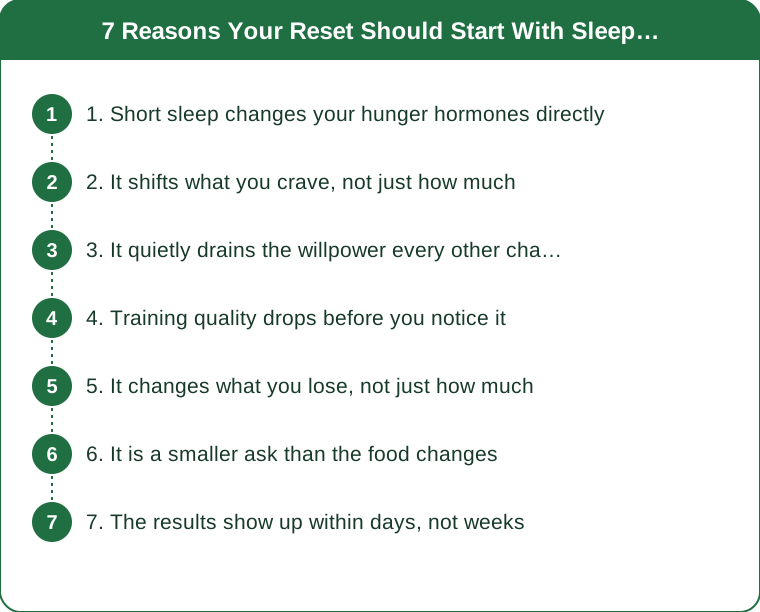
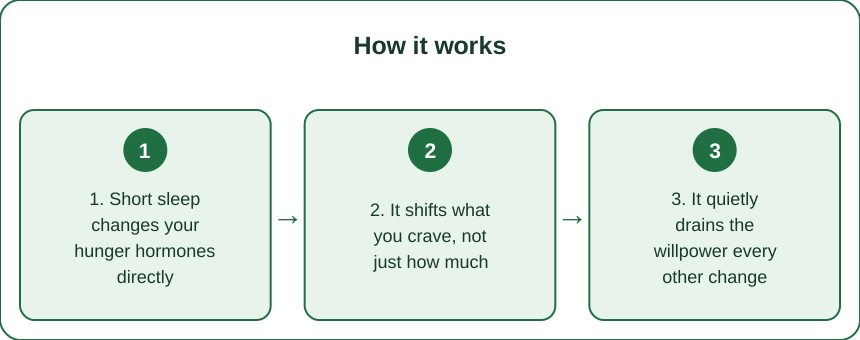
1. Short sleep changes your hunger hormones directly
This is the most concrete mechanism and it is not subtle.
Sleep restriction is consistently associated with increased ghrelin, which drives hunger, and decreased leptin, which signals fullness. The two move in opposite directions at the same time, which means you feel hungrier and are less able to register that you have eaten enough.
The practical consequence: on a short-sleep day, the same meal satisfies you less. You are not lacking discipline — the signal telling you to stop is genuinely quieter.
This is why a reset that starts with food while sleep stays at six hours is fighting a headwind it did not need to create. Fix the hormonal environment first and the food changes stop feeling like resistance.
2. It shifts what you crave, not just how much
The reward side moves as well as the hunger side.
Studies of sleep restriction consistently find increased preference for energy-dense, high-carbohydrate, high-fat foods specifically, along with heightened activity in brain regions associated with food reward and reduced activity in areas involved in evaluating consequences.
So it is not simply that you eat more. You want different things, and the things you want are precisely the ones a reset is trying to reduce.
This explains a very common experience: you plan a week of sensible meals, hold it together through Tuesday, and by Thursday evening you are eating something you did not plan and do not particularly want. Thursday is usually the day the accumulated sleep debt from Sunday onward becomes decisive.
3. It quietly drains the willpower every other change needs
Self-regulation is effortful, and sleep loss degrades exactly the executive functions that effort depends on.
A reset typically asks for several simultaneous changes — different meals, more cooking, less alcohol, more movement, less snacking. Each one requires a decision, repeatedly, all day.
Underslept, you have less capacity for every one of those decisions, and the shortfall shows up in the evening when the decisions are hardest. This is the mechanism behind the reset that collapses on day four, which is a pattern common enough to be almost universal.
The reframe: sleep is not one more item on the reset list. It is the resource the rest of the list is spent from.

4. Training quality drops before you notice it
The training side of a reset is where sleep loss shows up as a performance issue rather than a hunger one.
Short sleep is associated with reduced time to exhaustion, impaired reaction time and coordination, higher perceived exertion at the same workload, and slower recovery between sessions. The session is not just worse — it feels harder while producing less, which is a demoralizing combination in week one of anything.
There is also a downstream effect on spontaneous movement. Underslept people move less over the whole day without deciding to, and that non-exercise activity is a meaningful part of daily energy expenditure.
So the training you added to the reset delivers less than it should, and the incidental movement you were not counting quietly falls.
5. It changes what you lose, not just how much
This is the finding that reframes the entire priority order.
When people in a calorie deficit are sleep-restricted, a considerably larger proportion of the weight lost comes from lean tissue rather than fat, compared with the same deficit with adequate sleep. Total weight lost can look similar. The composition of that loss is meaningfully worse.
Which means a reset run on short sleep can produce a scale number you are pleased with and a body composition change you are not — less muscle, a lower resting expenditure, and a body that regains more easily afterward.
For anyone whose actual goal is how they look and feel rather than what the scale says, this alone justifies putting sleep first. The deficit is doing its job; the environment it is running in is deciding what gets used up.
6. It is a smaller ask than the food changes
The practical argument, and the one that makes it a good week-one target.
A food reset typically means changing three to five meals a day, every day, plus shopping, plus cooking, plus navigating other people’s plans. It is a lot of separate actions.
A sleep reset is essentially one decision, made once a day, in one place:
- A consistent wake time, which anchors the whole rhythm and is more important than a consistent bedtime
- A wind-down window of about 30 minutes with dimmer light and no screens
- A caffeine cutoff, generally 8 to 10 hours before bed, which is earlier than most people expect
- A cool, dark room
Four changes, all environmental rather than behavioral, all made once. Environmental changes stick far better than repeated decisions do, and this is the cheapest set of them available.
7. The results show up within days, not weeks
Motivation depends on early feedback, and this is where sleep beats food decisively in week one.
A food reset delivers almost nothing visible in the first week — the scale moves for water-weight reasons that are not fat loss, and the actual changes take a month to see. That gap between effort and evidence is where most resets die.
Sleep gives you feedback in two or three nights. Better mornings, easier decisions, quieter cravings, and better training. You feel the change before you have to trust the process, which is a completely different psychological position to start from.
FAQ: Sleep-First Reset Questions, Answered
How long should I do sleep only before adding food changes? One to two weeks is a reasonable window. Long enough for a genuine shift in how you feel, short enough that momentum carries into the next change. Some people find the food changes partly happen on their own once cravings settle.
What if I genuinely cannot sleep more — shift work, a baby, insomnia? Then consistency and quality are the levers rather than duration. A fixed wake time, a dark cool room, and a caffeine cutoff all help meaningfully even when total hours are constrained. Persistent insomnia is worth raising with a physician rather than managing alone — this is general information, not medical advice.
Does this mean the food side does not matter? Not at all. Energy balance still determines fat loss. The argument is about sequencing: fixing sleep first makes the food changes achievable, where doing both at once usually means doing neither well.
TL;DR:
- Short sleep raises ghrelin and lowers leptin, so the same meal satisfies you less
- It shifts cravings toward energy-dense food and drains the self-regulation every other change requires
- Training quality and daily movement both drop, and a larger share of lost weight comes from lean tissue
- It is four environmental changes rather than fifteen daily decisions, and you feel it within days
Starting with food is starting with the hardest change while the conditions for making it are at their worst. One week on sleep first, then the rest — and the rest gets noticeably easier.
Keep Reading
This article is for general informational and styling purposes only. Fit, sizing, and product availability may vary.