7 Signs Your Reset Is Working Before the Scale Moves
Quick Answer: Early in a reset, water retention, glycogen changes, and digestive contents mask fat loss almost completely - and those swings are larger than two weeks of real change. The reliable early signals are behavioural and physiological: steadier energy, less intense hunger between meals, better sleep, improved training performance, changed clothing fit, more stable mood, and reduced cravings. If several of those are moving, the reset is working. The scale catches up later, and it catches up suddenly.
Most resets are abandoned in week two or three.
Almost always while the actual indicators are pointing in the right direction.

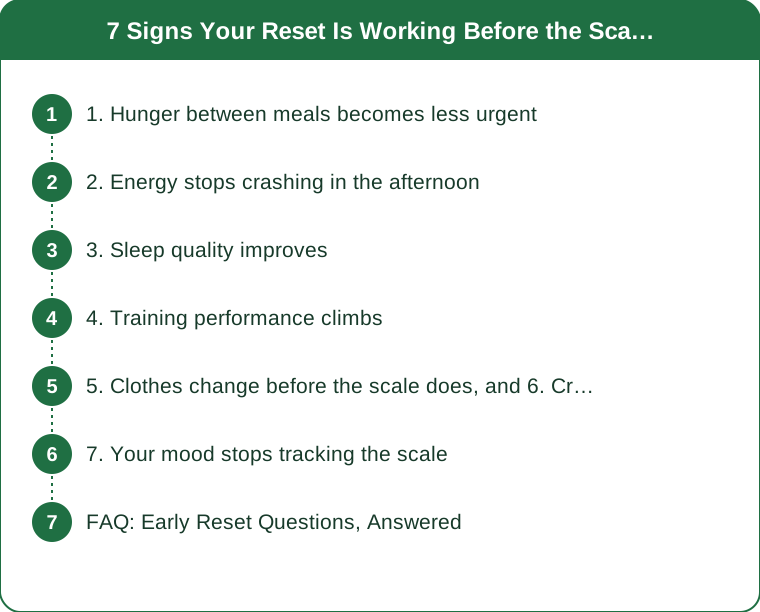
1. Hunger between meals becomes less urgent
This is often the first change, and it usually appears within seven to ten days.
Early hunger changes reflect meal composition more than calorie total. Higher protein and more fibre slow gastric emptying and change satiety hormone signalling, which shows up as a different quality of hunger rather than an absence of it.
The specific change to notice: hunger that arrives gradually rather than suddenly. Sharp, urgent hunger three hours after eating is characteristic of a meal that was low in protein and fibre. As those improve, hunger becomes a gentle background signal.
You will also notice you can delay a meal without it becoming a crisis. That flexibility is a genuine physiological change, not willpower.
Why it matters more than the scale: this is the change that determines whether the approach is sustainable. A plan you can maintain with mild hunger works; one that produces urgent hunger fails within a month, regardless of what the scale did in week two.
What to track: on a scale of one to ten, how intense was hunger before each meal? Three entries a day, one number each. A drop from seven to four across two weeks is a strong signal.
2. Energy stops crashing in the afternoon
The three o’clock slump is one of the most responsive early markers.
Afternoon energy crashes are driven substantially by lunch composition. A carbohydrate-heavy, low-protein lunch produces a sharper blood glucose rise and fall than a balanced one, and the fall is what people experience as the slump.
Adding protein and fibre to lunch changes this within days, often within the first week. It is one of the fastest changes available and one of the most noticeable.
Hydration contributes too. Mild dehydration produces fatigue and is common among people who have not been paying attention to intake. A reset usually increases water consumption incidentally, and the energy effect appears fast.
Why this predicts success: afternoon energy determines evening behaviour. A three o’clock crash reliably produces a four o’clock snack and a seven o’clock decision to abandon dinner plans. Fixing the crash removes the mechanism that derails most evenings.
What to track: rate your energy at three in the afternoon, one to ten, daily. Nothing else. This single number is one of the better early predictors you have.
3. Sleep quality improves
Often within the first two weeks, and it compounds everything else.
Several reset changes affect sleep directly. Reducing late-evening eating, cutting alcohol, and moving caffeine earlier all improve sleep quality measurably - and most resets include at least one of them.
Alcohol is the biggest single lever. It reduces REM sleep and fragments the second half of the night, and people who cut it typically report waking less within a week.
The change to notice is not total hours - it is how you feel on waking. Waking before the alarm, or waking without the immediate need for coffee, is the useful signal.
Why it matters enormously: sleep restriction increases appetite hormones and reduces satiety hormones, and it impairs both muscle retention and fat loss. Better sleep makes every other part of the reset easier, which is why it is a leading indicator rather than a nice side effect.
What to track: how many times you woke, and how you felt on waking, one to ten. Two entries, ten seconds, every morning.

4. Training performance climbs
Reps, weight, or pace - and this one is unambiguous.
Performance is objective in a way that almost nothing else in a reset is. You either did nine reps or you did not.
Improving performance during a reset is a strong signal that the deficit is appropriate. A too-aggressive deficit produces falling performance within two to three weeks - that is the clearest available sign that the plan needs adjusting.
Early gains are largely neural, but for this purpose that does not matter. What matters is the direction, because a rising trend means you are recovering adequately and eating enough to support training.
Watch for the specific warning sign: performance flat or falling for three consecutive weeks. That is the signal to eat more, not less - which is the opposite of what most people do at that point.
What to track: one number per session. Top set weight, total reps, or distance in a fixed time. A single number in a notebook is enough, and after eight weeks it will tell you more than eight weeks of daily weigh-ins.
5. Clothes change before the scale does, and 6. Cravings lose their grip
5. Fit changes first
Waist measurement and clothing fit can change noticeably while weight stays flat, because fat loss and water retention are happening simultaneously and pulling the scale in opposite directions.
Waistband fit is the most sensitive place to notice this, since abdominal fat is often where early loss shows. A pair of jeans that fastens more easily at the same body weight is direct evidence.
Measure the waist at the navel, monthly, first thing in the morning. Half an inch in a month is a good rate and is completely invisible on a scale that is also carrying two pounds of water variation.
6. Cravings become negotiable
Cravings do not disappear, but their character changes. The shift is from a compulsion to a preference - the thought arrives, and it is possible to notice it and let it pass.
Several mechanisms contribute: more stable blood glucose, better sleep, adequate protein, and simple habit change as the automatic evening routine gets replaced.
The timeline is usually two to three weeks, which is unfortunately just past the point where many people quit.
What to track: count the number of times a day you had a craving you acted on. Not whether you had cravings - whether you acted. That number falling from four to one is real progress the scale will not show for another month.
7. Your mood stops tracking the scale
The most important one, and the least discussed.
A reset that is working produces a change in relationship, not just in body. The specific sign: the number on the scale stops determining how the day goes.
Early in most attempts, the morning weigh-in sets the emotional tone. A good number produces adherence; a bad number produces the thought that it is not working, which produces abandonment. That loop is the actual mechanism by which most resets fail - not calories, not metabolism.
When you can see a two-pound overnight rise and correctly identify it as sodium and glycogen rather than failure, the loop is broken. That is a durable change and it predicts long-term outcomes better than any two-week result.
Practical version: weigh daily and only look at the weekly average, or stop weighing for a block and use the other six signals. Both work; the second works better for people who find the number emotionally loaded.
And expect the scale to move in steps rather than smoothly. Water retention masks fat loss for a week or two and then releases, producing a sudden drop that represents change that already happened. The whoosh is not the progress; it is the reporting.
What to track: nothing. Just notice whether a bad number still ruins the day. When it stops, the reset is working in the way that matters most.
FAQ: Early Reset Questions, Answered
How long before the scale actually moves?
Two to four weeks is normal before a clear trend emerges, and longer for people who started a new training program - added glycogen and water can mask fat loss entirely for the first fortnight. Judge on a four-week trend, not a two-week one.
What if none of the seven signs are moving?
Then check the fundamentals: protein intake, total food intake, sleep, and whether the plan is actually being followed on weekends. Weekend eating is the most common explanation for a plan that looks correct on paper and produces nothing.
Should I weigh myself at all?
If the number does not affect your day, daily weighing with a weekly average is genuinely useful data. If it does affect your day, stop and use waist measurement monthly instead. Both are valid; the second is better for more people than admit it.
TL;DR:
- Water and glycogen swings are larger than two weeks of real change - the scale is the worst early indicator.
- Hunger quality and afternoon energy change first, often within seven to ten days.
- Sleep improvement makes everything else easier and is a leading indicator, not a bonus.
- Rising training performance means the deficit is right; three flat weeks means eat more.
- Waist and clothing fit change before weight does, and cravings become negotiable around week three.
- The best sign is when the number stops setting your mood.
Pick three of the seven and track one number each for the next two weeks. That is a better dashboard than a scale.
Keep Reading
This article is for general informational and styling purposes only. Fit, sizing, and product availability may vary.