7 Signs Your Weight Loss Reset Actually Needs a Full Week, Not Just a Day
Quick Answer: A single reset day can address acute bloating or a day or two of poor food choices, but it can’t meaningfully rebuild consistent habits, restore disrupted sleep patterns, or produce measurable metabolic and hydration normalization — those changes generally require sustained behavior over multiple consecutive days, which is why persistent fatigue, ongoing cravings, or habit inconsistency signal a need for a full week-long reset rather than a quick single-day fix.
A one-day reset is a reasonable tool for a very specific, narrow situation, but most of the signs that actually prompt someone to reset in the first place point toward needing a full week, not a single day.

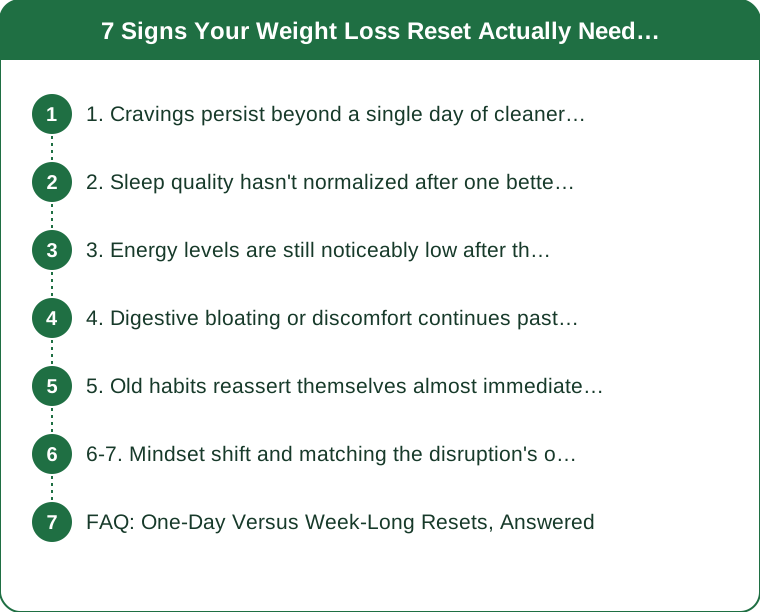
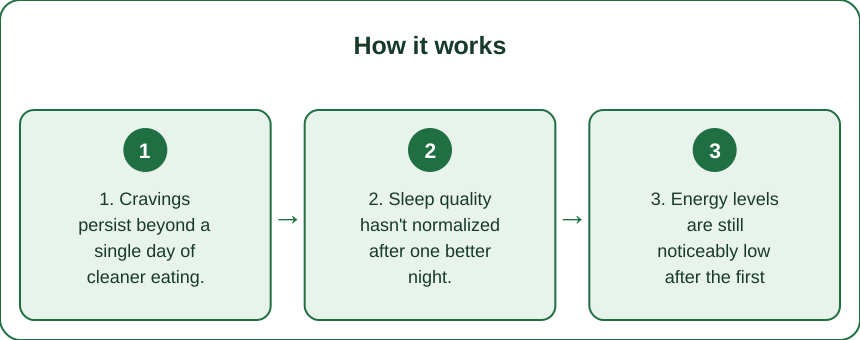
1. Cravings persist beyond a single day of cleaner eating.
If cravings for the specific foods being “reset” away from are still strong on day two or three, this suggests the underlying habit or blood-sugar pattern driving those cravings hasn’t yet shifted — a single day rarely breaks an established craving pattern, while several consecutive days of more stable eating more reliably does.
2. Sleep quality hasn’t normalized after one better night.
One night of improved sleep hygiene often isn’t enough to fully reset a disrupted sleep pattern, particularly if the disruption built up over multiple weeks; sleep architecture typically needs several consecutive nights of consistent, good sleep habits to meaningfully stabilize, which a single reset day’s bedtime adjustment can’t fully accomplish.
3. Energy levels are still noticeably low after the first reset day.
Persistent low energy beyond an initial day often reflects a combination of factors (hydration, blood sugar stability, sleep debt) that take cumulative days of consistent habits to meaningfully improve, rather than a single day’s dietary change being able to resolve energy levels that took longer than a day to decline.

4. Digestive bloating or discomfort continues past the first 24 hours.
Digestive normalization, particularly after a period of inconsistent eating, often takes several days of consistent fiber, hydration, and meal timing to meaningfully settle, since gut motility and the digestive system’s rhythm don’t reset instantly with one clean day.
5. Old habits reassert themselves almost immediately after the single reset day ends.
If the old pattern (skipping meals, late-night snacking, minimal movement) returns right after a single reset day, this signals the reset day functioned as an isolated event rather than genuinely interrupting the habit pattern — habit change generally requires more repetition than a single day provides to create any lasting shift.
6-7. Mindset shift and matching the disruption’s own length.
6. Motivation and mindset haven’t meaningfully shifted from a single day’s effort.
A single successful day can feel good in the moment without translating into renewed follow-through the next day, particularly if the underlying burnout or motivation dip that prompted the reset in the first place took longer than a day to develop — a full week gives more room for a genuine mindset shift to take hold than a single isolated effort.
7. The original disruption (travel, illness, a stressful period) lasted longer than a day itself.
If whatever originally disrupted normal habits extended across multiple days or weeks, it’s reasonable to expect the recovery and reset process to similarly require more than a single day — matching the reset’s length to the length of the original disruption is a more realistic framework than expecting a single day to undo an extended period.
FAQ: One-Day Versus Week-Long Resets, Answered
Is a one-day reset ever actually the right tool, or should it always be extended to a full week?
A one-day reset can be reasonable after a single isolated event, like one indulgent day or a single poor night’s sleep, where the disruption itself was genuinely brief and contained.
Does a week-long reset need to be extremely restrictive to be effective?
No — an effective week-long reset generally emphasizes consistency in reasonable habits (balanced meals, adequate sleep, regular movement) rather than extreme restriction, which is often harder to sustain and can backfire.
What’s a reasonable way to know when a week-long reset has actually worked?
Noticing sustained improvement in energy, digestion, sleep, and reduced cravings by the end of the week, rather than expecting a specific number on a scale, is a more reliable indicator that the reset achieved its actual purpose.
TL;DR:
- Persistent cravings, low energy, or bloating beyond a single day signal a need for a longer reset
- Sleep and digestive normalization generally take several consecutive consistent days, not just one
- Old habits reasserting immediately after a single reset day suggest genuine change hasn’t taken hold yet
- Matching reset length to the length of the original disruption is a more realistic planning approach
A single reset day works for a narrow, genuinely brief disruption, but most of the common signs prompting a reset point toward needing a full week of consistent habits to actually produce lasting change.
Keep Reading
This article is for general informational and styling purposes only. Fit, sizing, and product availability may vary.