7 Signs Your Weight Loss Reset Needs More Protein, Not Fewer Calories
Quick Answer: Persistent hunger despite eating enough calories, muscle loss alongside fat loss, slow recovery from workouts, and constant cravings are common signs that a weight loss reset’s real issue is insufficient protein rather than total calories being too high — and the fix is often reallocating calories toward protein, not cutting further.
The calories are tracked, the deficit is real, and the scale still won’t budge the way it should — while hunger somehow gets worse, not better. That combination usually points somewhere other than ‘eat even less.’

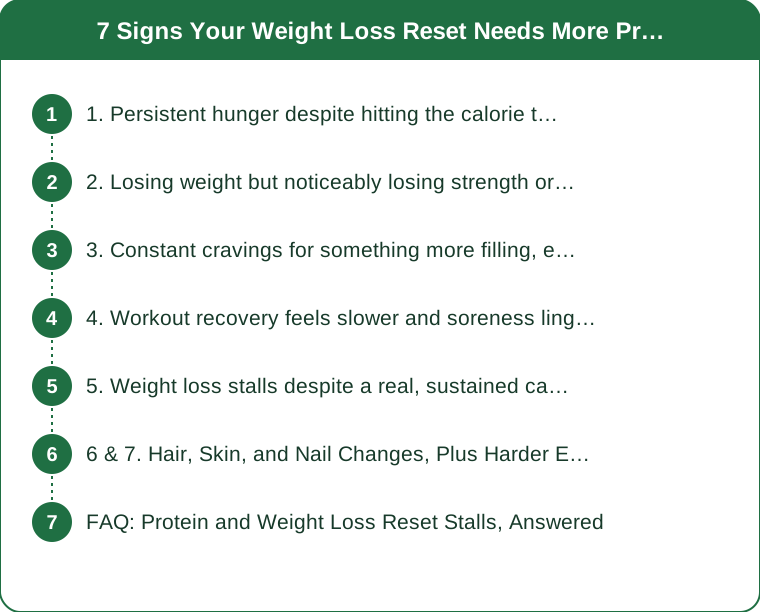
1. Persistent hunger despite hitting the calorie target consistently
Protein is the most satiating macronutrient per calorie, and a reset built mostly around cutting carbs or fat while keeping protein low often leaves genuine, hard-to-ignore hunger even at an appropriate total calorie level — this is a strong signal the calorie distribution, not the total, needs adjusting.
2. Losing weight but noticeably losing strength or muscle definition too
When calorie intake drops without adequate protein to match, the body pulls from both fat and muscle tissue for energy rather than fat alone, meaning the scale moves but a meaningful portion of that loss is muscle — showing up as reduced strength in the gym or a softer, less toned look despite a lower number on the scale.
3. Constant cravings for something more filling, even after meals
Meals that feel over immediately after eating, followed by cravings for more food within an hour or two, often reflect insufficient protein rather than insufficient total volume, since protein’s satiety effect works differently than simply eating more low-protein food.

4. Workout recovery feels slower and soreness lingers longer than usual
Protein is essential for muscle tissue repair, and a reset with inadequate protein intake can measurably slow recovery between workouts, showing up as lingering soreness or reduced performance in sessions that would normally feel manageable.
5. Weight loss stalls despite a real, sustained calorie deficit
Metabolic adaptation happens more aggressively when the body is losing both fat and muscle rather than mostly fat, and since muscle tissue burns more calories at rest than fat tissue, low protein intake accelerating muscle loss can directly contribute to the kind of stubborn plateau that further calorie cutting won’t fix and may even worsen.
6 & 7. Hair, Skin, and Nail Changes, Plus Harder Energy Crashes
6. Hair, skin, or nail changes show up alongside the weight loss
Protein is a structural building block for hair, skin, and nails, and noticeably increased hair shedding or brittle nails during an aggressive low-protein reset can be a sign intake has dropped below what the body needs for these lower-priority (but still real) functions, not just muscle maintenance.
7. Energy crashes hit harder and more often than before starting the reset
Protein helps stabilize blood sugar and energy levels alongside carbohydrates, and a reset that’s cut protein along with total calories can produce more frequent or severe energy dips than the calorie deficit alone would explain, especially in the afternoon or between meals.
FAQ: Protein and Weight Loss Reset Stalls, Answered
How much protein is generally considered adequate during a weight loss reset?
A common general target is roughly 0.7-1 gram of protein per pound of body weight daily, though individual needs vary, and this is worth discussing with a doctor or registered dietitian for a number tailored to specific health circumstances.
Is it possible to add protein without increasing total calories significantly?
Yes — swapping some lower-protein calorie sources (like refined carbs or added fats) for leaner protein options, rather than simply adding protein on top of existing intake, can increase protein without meaningfully raising total calories.
Should someone increase protein and pause further calorie cuts if they notice several of these signs?
That’s a reasonable first step for many people, and if the signs persist despite adjusting protein intake, checking in with a doctor or registered dietitian is a sensible next move rather than continuing to guess.
TL;DR:
- Persistent hunger, muscle loss, and cravings despite a real deficit often point to a protein gap, not too many calories
- Low protein during a deficit can accelerate muscle loss, which slows metabolism and worsens plateaus
- Slower workout recovery and hair or nail changes can be underrated signs of inadequate protein
- Reallocating calories toward protein, rather than cutting further, is often the more effective fix
This is general information, not medical advice — a registered dietitian can help set protein targets for individual needs. When a reset stalls and hunger won’t quit, checking protein intake before cutting calories again is usually the more productive move.
Keep Reading
This article is for general informational and styling purposes only. Fit, sizing, and product availability may vary.