7 Weight-Loss Reset Habits That Quietly Undo Themselves by Friday, Even With Good Intentions
Quick Answer: Many weight-loss resets fail by Friday not because motivation runs out, but because a handful of specific structural habits — overly strict early-week rules, no plan for weekend social situations, and treating one off-track meal as a reason to abandon the whole week — combine to make the reset fragile by design, even when the person starting it is genuinely committed.
The reset itself often isn’t the problem — it’s a few specific, fixable gaps in how the week is structured around it.

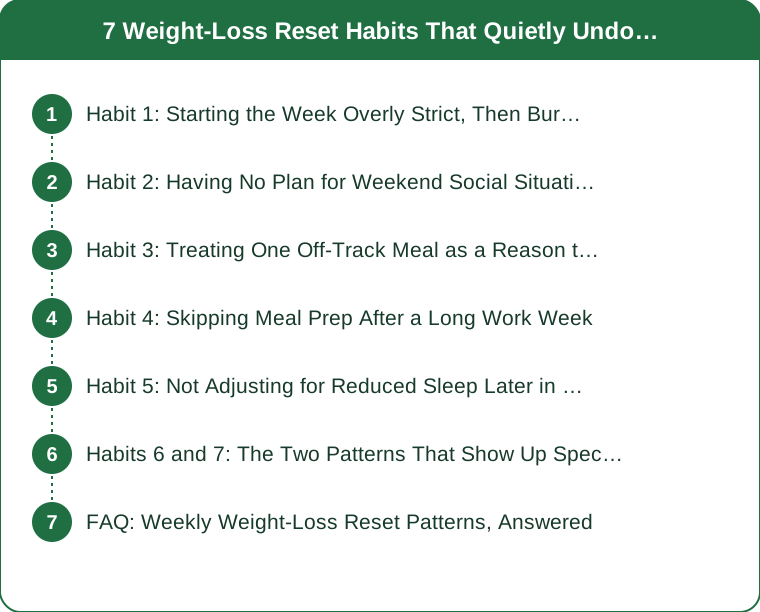
Habit 1: Starting the Week Overly Strict, Then Burning Out by Wednesday
An unsustainably strict Monday-Tuesday approach often triggers fatigue or rebound eating by midweek, since extreme restriction is harder to sustain than a moderate, repeatable approach across a full week.
Habit 2: Having No Plan for Weekend Social Situations
Resets built entirely around weekday routines often have no real strategy for weekend meals out or social events, leaving decisions to be made in the moment under less favorable conditions than a planned weekday meal.
Habit 3: Treating One Off-Track Meal as a Reason to Abandon the Whole Day
A single meal that doesn’t go as planned often triggers an all-or-nothing response that turns one off meal into an entire abandoned day, compounding a small deviation into a much larger one.

Habit 4: Skipping Meal Prep After a Long Work Week
Prep time and energy for planning meals often decline by midweek, leading to more reactive, less intentional food choices exactly when consistency matters most for holding a reset together.
Habit 5: Not Adjusting for Reduced Sleep Later in the Week
Sleep quality commonly declines by midweek for many people, and reduced sleep is linked to increased hunger cues and reduced impulse control, which can undermine intentions that felt solid earlier in the week.
Habits 6 and 7: The Two Patterns That Show Up Specifically on Fridays
Habit 6: Treating Friday as an Automatic Reward Day
Framing Friday as an earned reward regardless of how the week actually went can turn a planned, moderate indulgence into an unplanned, much larger one.
Habit 7: Not Having a Re-Entry Plan for Saturday Morning
Without a specific plan for getting back on track the morning after a looser Friday, a single lighter day can quietly extend into the entire weekend.
FAQ: Weekly Weight-Loss Reset Patterns, Answered
Is it realistic to expect a reset to hold perfectly every single week?
No — occasional deviation is normal and expected; the more useful goal is limiting how far and how long a deviation extends, rather than achieving perfect adherence.
Does planning specifically for weekends actually make a measurable difference?
Yes — having even a loose plan for weekend meals tends to reduce impulsive, less intentional choices compared to no plan at all.
What’s a reasonable way to handle an off-track meal without abandoning the whole day?
Simply returning to the plan at the next meal, rather than treating one meal as evidence the whole day is already lost, limits the size of any single deviation.
TL;DR:
- Overly strict early-week rules often trigger burnout or rebound eating by midweek
- No plan for weekend meals and treating one off meal as a lost day both compound small slips
- Declining meal prep energy and sleep quality by midweek quietly undermine good intentions
- Treating Friday as an automatic reward without a Saturday re-entry plan often extends the whole weekend
Keep Reading
This article is for general informational and styling purposes only. Fit, sizing, and product availability may vary.