7 Weight Loss Reset Mistakes That Only Show Up in Week Two
Quick Answer: Week one of a reset runs on novelty, motivation, and a deficit large enough to produce fast early scale movement - none of which are still available in week two. The failure points are almost always structural decisions made while week one felt easy: too large a deficit, too many simultaneous changes, no plan for a bad day. Week two is not when you lost discipline. It is when the plan you built ran out of the conditions it needed.
Seven mistakes, in the order they usually take effect.

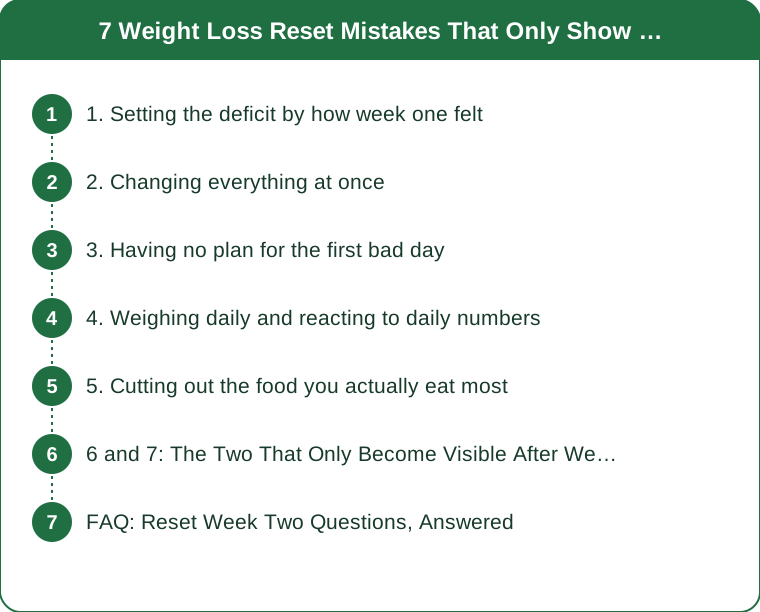
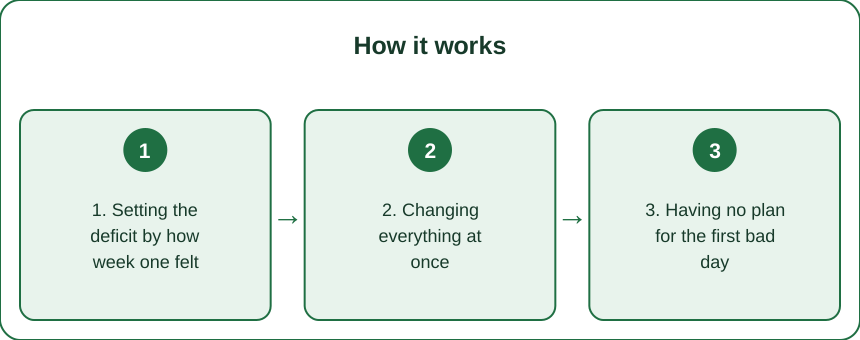
1. Setting the deficit by how week one felt
Week one feels easy for reasons that expire. Novelty carries effort, glycogen and water losses make the scale move fast, and motivation is at its peak on day one by definition. A deficit that feels comfortable under those conditions is frequently too aggressive for the following six weeks.
The rapid early drop is mostly not fat. Reducing carbohydrate intake reduces stored glycogen, and glycogen holds water - several pounds can move in the first week for that reason alone. When it stops in week two, it reads as failure. It is not; it is arithmetic.
A deficit of roughly 10 to 20% below maintenance is sustainable for most people. Larger deficits work in the short term and reliably produce the hunger, fatigue, and irritability that end the attempt.
The test to apply in week one: could you do this on your worst week - the one with poor sleep, a deadline, and no time to cook? If the answer is no, the deficit is set for your best conditions, and your best conditions are not a plan.
Practical correction: if week one felt effortless, that is a signal to check your numbers rather than to congratulate yourself.
2. Changing everything at once
A typical reset starts on a Monday with food, training, sleep, alcohol, and screen time all changing simultaneously. Each individual change is reasonable. Together they require far more self-regulation than any one of them, and self-regulation is a finite resource across a day.
Week one absorbs the load because motivation is high. Week two hits the first genuinely difficult day - a bad night, a work crisis, a social event - and every changed behaviour is competing for the same depleted capacity at the same moment.
And when one falls, they tend to fall together, because they were bundled into a single identity: doing the reset. Breaking one feels like breaking all of it.
The alternative is sequencing. Establish one or two changes until they take minimal effort - typically two to three weeks - then add the next. It feels slower and it finishes far more often.
If you must start several at once, rank them. Know in advance which one is non-negotiable and which ones are allowed to slip on a difficult day. Deciding that in advance, while calm, is what stops a bad Tuesday from ending the whole thing.
3. Having no plan for the first bad day
A bad day is not a risk to plan against - it is a certainty to plan for. Illness, a late night, travel, an unexpectedly hard week. It will arrive, usually in week two.
Without a plan, the bad day becomes a binary. You are either on the plan or off it, and once you are off it, the rest of the week is already lost in your head - which is what turns one difficult evening into a fortnight.
Build a minimum version in advance. Not the full plan - the smallest version that still counts. A protein target and a ten-minute walk. Nothing else. The minimum version is what preserves the streak when the full version is not available.
Write it down while week one is going well, because the middle of a bad day is the worst possible moment to design a fallback.
And separate the day from the plan. One high day does not undo a week - the maths simply does not work that way. What undoes the week is the three days of abandonment that follow the one high day, and those are a decision rather than a consequence.

4. Weighing daily and reacting to daily numbers
Body weight fluctuates by several pounds day to day from water, sodium, carbohydrate intake, digestion, hormonal cycle phase, and training. None of that is fat.
Week one gives you a downward run of numbers, which trains you to expect daily progress. Week two delivers the first flat or upward stretch - and because the expectation was built on an artefact, the normal fluctuation reads as failure.
Then comes the over-correction: cutting further, adding cardio, or concluding it does not work. All three make the next fortnight harder.
Weigh daily if you like, but only ever read the weekly average - the seven-day mean against the previous one. Individual days are noise; the trend of averages is the signal.
Add non-scale measures, because they often move when the scale does not. Waist measurement, how clothes fit, training performance, energy, and sleep. During any phase where you are gaining muscle while losing fat, these are more informative than body weight by a wide margin.
And know your cycle if you have one. Water retention across the luteal phase can mask genuine fat loss for a week or more. Comparing the same phase month to month is a far fairer read than comparing consecutive weeks.
5. Cutting out the food you actually eat most
Resets tend to start by eliminating whole categories - bread, pasta, sugar, alcohol, snacks. The elimination is easy in week one and expensive by week two, because it removes the foods that were doing a job.
Restriction reliably increases the salience of the restricted food. The more absolute the rule, the more attention the food gets - which is why week two is when the thinking about it starts, well before any eating happens.
It also removes convenience. The eliminated foods are frequently the fast, easy, always-available ones. Take them out without replacing the function and you have created a gap that appears exactly when you are most tired.
Reduce and structure rather than eliminate. A smaller portion, a defined time, a planned frequency. Foods that remain available in a controlled way lose the pull that banned foods acquire.
And keep at least one genuinely enjoyable thing in the plan every day. A plan with nothing to look forward to is a plan you are waiting to finish - and waiting to finish is a countdown, not a change.
Alcohol deserves its own note: it is worth reducing for both calorie and sleep reasons, but a total ban that collides with a social calendar in week two often takes the whole plan with it. A planned allowance survives contact with real life.
6 and 7: The Two That Only Become Visible After Week Two
6. Ignoring how much your daily movement quietly dropped
Non-exercise activity - walking, fidgeting, standing, general moving about - is a large and highly variable share of daily energy expenditure, and it falls in response to an energy deficit without you deciding anything.
In week one you feel energetic and move more. By week two, the same deficit produces less spontaneous movement: fewer steps, more sitting, less restlessness. Your expenditure has dropped while your intake stayed the same, which narrows the deficit you carefully calculated.
This is one of the main reasons progress slows in weeks two and three without any change in eating - and it is invisible unless you count steps.
Track steps as a plan variable, not as exercise. A daily step floor - whatever is realistic for you - protects a large chunk of expenditure that no workout replaces.
And do not compensate with harder training. Adding intense sessions on top of a deficit increases recovery cost and often reduces daily movement further. More walking beats more intensity for this specific problem.
As the days shorten heading into autumn, this gets harder for a seasonal reason too - fewer evening daylight hours means fewer casual walks. Moving the walk to lunchtime is a small change that protects the number through the season change.
7. Treating the reset as a phase with an end
The word reset implies a return to normal afterwards, and that expectation shapes every decision inside it. A plan you are enduring temporarily gets built as something too strict to keep.
Which produces the well-known pattern: the reset works, ends, and the previous behaviours resume - because they were never replaced, only suspended.
The better frame is a change with a maintenance version built in from the start. What does this look like at maintenance calories? If you cannot answer that in week one, you are building something you will exit rather than something you will keep.
Plan the transition before you need it. A defined end point with a step up to maintenance is far better than continuing until it collapses.
And judge the reset by what remains three months later, not by what the scale said at the end of it. A modest change you kept is worth more than a large one you reversed - and by week two, you can usually already tell which one you are building.
This is general information, not medical advice. If you have a history of disordered eating, a medical condition affecting weight, or you are taking medication that affects appetite or metabolism, work with a healthcare professional or registered dietitian rather than following general guidance.
FAQ: Reset Week Two Questions, Answered
Why did my weight loss stop in week two?
Most of week one’s drop is glycogen and water rather than fat. Week two shows the real rate, which is much slower - plus your spontaneous daily movement has usually declined by then.
Should I cut calories further if week two stalls?
Generally no. Check your weekly average rather than daily numbers, check your step count, and give it another week before changing anything. Stalling at week two is the expected pattern, not a signal.
How big should my deficit be?
Roughly 10 to 20% below maintenance suits most people. The practical test is whether you could sustain it during a bad week, not whether it feels easy during a motivated one.
Is it better to change one thing at a time?
Usually yes. Sequencing changes every two to three weeks finishes more often than changing everything on one Monday, because it does not compete for the same limited self-regulation.
How often should I weigh myself?
Daily is fine as long as you only read the weekly average. Individual days move several pounds on water, sodium, and cycle phase, none of which is fat.
What do I do after a day completely off plan?
Return to the plan at the next meal. One high day does not undo a week - the abandonment that follows it does, and that part is a choice rather than a consequence.
TL;DR:
- Week one feels easy because of novelty, peak motivation, and glycogen-and-water scale movement - all three expire.
- Set the deficit for your worst week, not your best one: roughly 10 to 20% below maintenance.
- Sequence changes two to three weeks apart instead of starting five at once.
- Build a minimum version - protein target plus a short walk - and write it down while things are going well.
- Read the weekly average, never the daily number, and add waist, fit, and performance measures.
- Reduce and structure rather than eliminate, and keep one genuinely enjoyable thing every day.
- Protect a daily step floor - spontaneous movement falls in a deficit and quietly closes your gap.
- Build the maintenance version from day one, or you are building something you will exit.
Week two is not where discipline failed. It is where week one’s assumptions came due.
This is general information, not medical advice.
Keep Reading
This article is for general informational and styling purposes only. Fit, sizing, and product availability may vary.