Why Your First 2 Weeks of Weight Loss Are Mostly Water (And Why That's Fine)
Quick Answer: The fast drop in weeks 1-2 is mostly water tied to glycogen stores — each gram of glycogen holds about 3 grams of water, so as you eat fewer carbs and burn through stored glycogen, that water releases too. Fat loss continues steadily underneath, just without the dramatic scale numbers.
You lost 5 pounds in the first 10 days and felt unstoppable. Then week three showed half a pound. Nothing broke — you just crossed from the glycogen-water phase into the actual fat-loss phase, and the second one is slower by design.

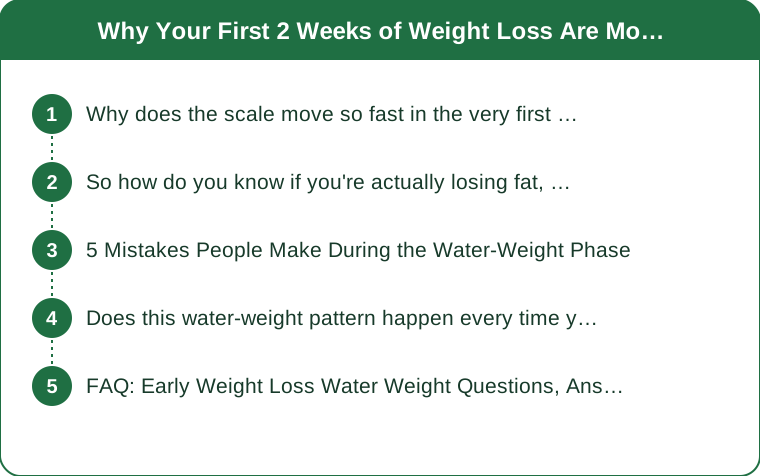
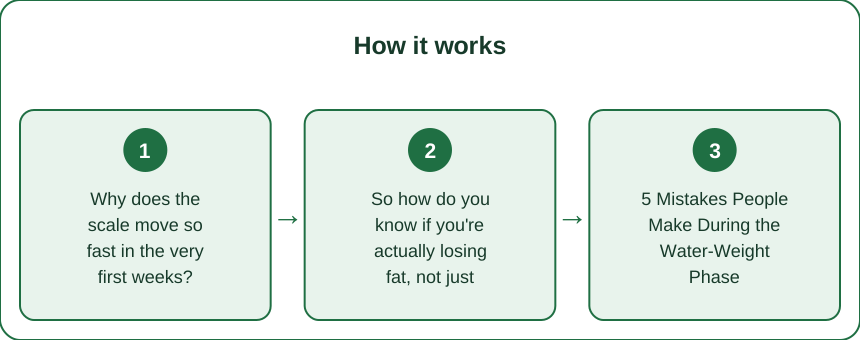
Why does the scale move so fast in the very first weeks?
Because your body stores carbohydrate as glycogen bound with water — roughly 3-4 grams of water for every gram of glycogen stored in muscle and liver tissue.
When you reduce calories or carbs, your body taps into glycogen reserves for energy, releasing that bound water as a byproduct. A typical person might carry 400-600g of glycogen, meaning 1.5-2.5kg (3-5lbs) of pure water weight is available to drop in the first week or two alone — before any meaningful fat loss has even happened.
So how do you know if you’re actually losing fat, not just water?
Look for the trend after week 3, once glycogen stores have stabilized. Steady, smaller losses (0.5-1% of body weight per week) from that point on reflect real fat loss, not water fluctuation.
Tape measurements (waist, hips) and how clothes fit are better week-to-week indicators than the scale during this transition period, since they don’t get thrown off by daily water shifts from sodium, carbs, or hormonal cycles.

5 Mistakes People Make During the Water-Weight Phase
1. Assuming the fast pace will continue. It won’t, and expecting it sets up a fake plateau feeling in week 3.
2. Cutting calories further when the scale slows. This usually isn’t a calorie problem — it’s a normal physiological transition, not a stall requiring a bigger deficit.
3. Weighing daily and reacting to every number. Daily water fluctuation (sodium, hormones, carb refeeds) can swing 1-3lbs regardless of fat loss — weekly averages tell the real story.
4. Getting discouraged and quitting around week 3. This is exactly when people abandon a plan that was actually working correctly.
5. Ignoring non-scale progress. Energy levels, strength, sleep quality, and measurements often keep improving even when the scale number briefly plateaus.
Does this water-weight pattern happen every time you start a new diet phase?
To some degree, yes — any time you meaningfully drop carb intake or calories after a period of higher intake, some glycogen-water shift happens again, just usually smaller than the very first time.
This is also why refeed days or diet breaks can cause a temporary scale bump that isn’t fat regain — it’s glycogen and its associated water refilling, which reverses again within days of returning to your plan.
FAQ: Early Weight Loss Water Weight Questions, Answered
How much of my first-week weight loss was actually fat?
For most people starting a new calorie deficit, a meaningful portion of week-one loss is water — true fat loss is closer to 0.5-1lb/week even during that dramatic first week, layered underneath the water shift.
Why did my weight go up after a high-carb meal during a diet?
Extra carbs pull extra water in with the glycogen they refill — a single high-carb day can show up as 1-3lbs on the scale within 24-48 hours, with zero actual fat gained.
When should I stop expecting rapid scale drops?
By week 3-4, most of the glycogen-water shift has settled, and the scale should reflect a steadier, slower trend that maps more closely to actual fat loss.
TL;DR:
- Fast early scale drops are mostly glycogen-bound water, not fat — about 3-5lbs worth for most people
- Real fat loss trend becomes visible after week 3, once glycogen stabilizes
- Use weekly averages and measurements, not daily scale readings, to judge progress
- A scale bump after a high-carb day is water refilling, not fat regain
The slowdown in week three isn’t a stall — it’s the water phase ending and the real work becoming visible.
Keep Reading
This article is for general informational and styling purposes only. Fit, sizing, and product availability may vary.