Non-Scale Victories: The Progress the Bathroom Scale Can't See
Quick Answer: A non-scale victory is any measurable improvement the scale has no sensor for — stairs without huffing, rings loosening, better sleep, a walk streak, jeans that button easily. Track them in a dated one-line journal and review monthly. Body weight fluctuates 2–4 lbs daily from water, sodium, and hormones alone, which is why flat scale weeks routinely coexist with full pages of real progress.
The scale measures gravity’s opinion of you once a day. Somehow it got promoted to sole judge of everything.
Meanwhile the actual evidence goes unrecorded: the flight of stairs that stopped being an event, the sleep that got deeper, the jeans that quietly negotiated peace. None of it registers on a device that can’t distinguish between fat, muscle, water, and last night’s soy sauce.
The non-scale victory inventory is the honest scoreboard. It takes about ten seconds a day, and it’s the single most effective thing for surviving a plateau.

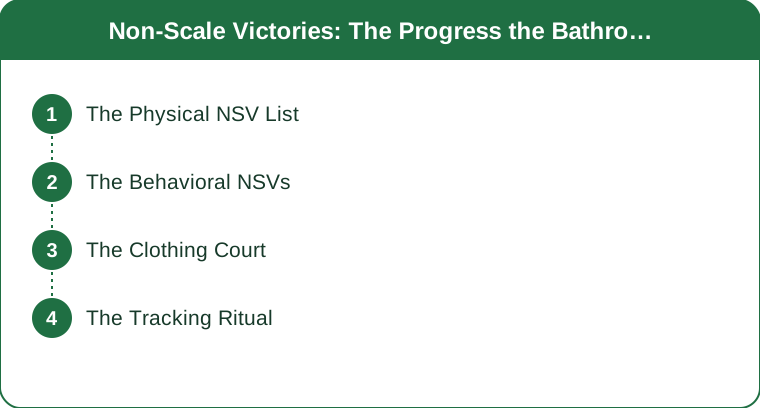
What Counts as a Non-Scale Victory?
Anything that improved and isn’t a number on a scale. The physical list is longer than most people expect:
- Stairs without the huff. The clearest cardiovascular marker available and completely free to check.
- A walk that got longer without feeling longer. Same perceived effort, more distance — that’s fitness, arriving quietly.
- Rings and watch straps loosening. Fingers and wrists lose circumference early and honestly.
- Crossing your legs comfortably. Or tying shoes without holding your breath, or getting off the floor without using your hands.
- Blood pressure and blood work drifting kindly. These are the ones your doctor cares about, and they often improve well before weight does.
- Energy at 4pm where the crash used to live.
- Sleeping through the night, or waking without the fog.
- Recovering faster — the stairs at the end of the day feel the same as the stairs at the start.
Every one of these is measurable progress. The scale simply has no sensor for any of them.
Why Do Behavioral Victories Count Too?
Because outcome lags behavior by weeks, and morale has to be funded through the gap.
The habits are victories: the week of packed lunches, the seven-day walk streak, the water bottle actually emptied, the vegetable that stopped being a decision and became a default.
This matters more than it sounds. If you only score outcomes, you get feedback on a two-to-four-week delay, which is a terrible interval for anything you’re trying to sustain daily. Scoring behavior gives you same-day feedback on something you fully control — and behavior is the only input you ever actually controlled anyway.
There’s a practical version of this: on any day the scale is unhelpful, ask “did I do the things?” instead. If the answer’s yes for three weeks running and nothing has moved, then you have a genuine question worth investigating.

Are Clothes a Better Measure Than the Scale?
For body composition, usually yes — and this is the most underused measurement tool available.
Clothes measure circumference. Scales measure everything, including the roughly 2–4 lbs of daily fluctuation that comes from water retention, sodium, glycogen, hormonal cycle, and what time you last used the bathroom. Fabric is indifferent to all of it.
The jeans easing at the waist. The belt notch migrating. A shirt buttoning without negotiation. These out-testify a scale routinely, and they’re especially important if you’re strength training — muscle gain and fat loss can hold your weight perfectly flat while your measurements change substantially.
Keep one honest reference outfit. Something currently slightly snug, not the aspirational item from four years ago. Try it on the first of every month, same time of day. Trust its verdict over the scale’s.
A tape measure at the waist, hips, and chest does the same job with more precision, if you’d rather have numbers. Once a month, same conditions, in the morning.
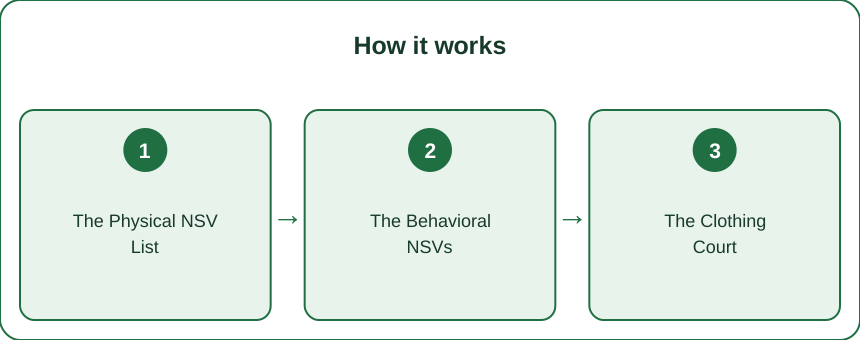
How Do You Actually Track Non-Scale Victories?
The NSV journal, and the format matters more than the tool:
One line. Dated. Reviewed monthly.
That’s it. A notes app, the back of a planner, whatever you’ll actually open. “Aug 23 — walked to the store instead of driving, didn’t think about it.” “Aug 19 — slept through the night three nights running.”
The monthly review is where the value is. A flat scale week routinely coexists with a full page of NSVs, and seeing those side by side is the most effective antidote to plateau despair there is. Plateaus are normal, they’re often the point at which people quit, and they’re almost never as flat as they feel.
Keep the scale if it’s useful to you. It keeps its Tuesday slot — it just loses the gavel. Weigh weekly rather than daily if the daily number affects your mood, and look at the trend across four weeks rather than any single reading.
A note worth stating plainly: if tracking of any kind — scale, measurements, or journal — is making you anxious, restrictive, or preoccupied, that’s a signal to stop measuring and talk to a doctor or a registered dietitian. Progress tracking is supposed to be a tool, and it stops being one the moment it becomes the thing you think about most.
5 Progress-Tracking Mistakes Everyone Makes
1. Weighing daily and reading each number as news. Day-to-day movement is water, sodium, and timing. If you weigh daily, you have to commit to reading only the four-week trend line — otherwise weekly is kinder and just as informative.
2. Comparing to an aspirational reference outfit. The jeans from four years ago measure nothing except how you feel about four years ago. Use something currently slightly snug.
3. Only counting outcomes. Behavior is the thing you control and the thing that produces the outcome six weeks later. Scoring only the outcome means running on no feedback during the exact period you most need some.
4. Quitting at the first plateau. Plateaus are normal, they usually last two to four weeks, and they’re where most people stop. The NSV journal exists specifically to get you through this stretch with evidence in hand.
5. Measuring under different conditions each time. Different time of day, different clothes, after different meals. Consistency of conditions matters more than precision of instrument — same morning, same state, same tape.
Mini FAQ
How often should you weigh yourself?
Weekly is enough for most people, same day, same time, same conditions. Daily weighing works for some — it makes the fluctuation obvious and therefore less alarming — but only if you’re genuinely reading the trend line rather than reacting to each reading. If a bad number ruins your day, weigh less often.
Why is the scale not moving but clothes fit better?
Almost always body recomposition: you’re losing fat and gaining or maintaining muscle at similar rates. Muscle is denser than fat, so the same weight occupies less space. This is a good outcome that a scale is structurally incapable of showing you, which is the entire argument for measuring circumference instead.
What if I have no non-scale victories yet?
You probably have behavioral ones you haven’t counted. Did you go for the walk? Cook instead of ordering? Start at all? Those count, and they’re the ones that produce the physical NSVs six weeks from now. Start the list with those.
TL;DR:
- NSVs are real, measurable progress the scale has no sensor for — stairs, rings, sleep, energy, blood work.
- Score behaviors too; outcomes lag by weeks and morale needs funding through the gap.
- Clothes measure circumference, which is what you actually care about — keep one reference outfit, try it monthly.
- Journal one dated line per victory and review monthly; flat scale weeks routinely come with full NSV pages.
- Keep the scale if it helps, weigh weekly, read the four-week trend — and stop tracking entirely if it’s making you anxious.
Log the stairs, the jeans, the streaks, the 4pm energy. The scale was one instrument promoted well past its competence — the victory inventory is the full orchestra, and it plays every week.
Keep Reading
This article is for general informational and styling purposes only. Fit, sizing, and product availability may vary.