The Kitchen Reset That Makes the First Two Weeks of a Health Restart Easier
Quick Answer: The first two weeks of any eating change are decided less by your resolve than by your kitchen’s defaults — you eat what is visible, easy, and one step away, dozens of times a week, mostly without deliberating. A ninety-minute reset flips those defaults: produce and protein move to eye level and front stage, treats move into opaque containers and inconvenient shelves without being banned, and two stations — breakfast and water — remove the day’s first decisions entirely. Nothing is forbidden; everything is re-priced in effort.
Environment design is not a hack around discipline. It is what discipline was being wasted on.

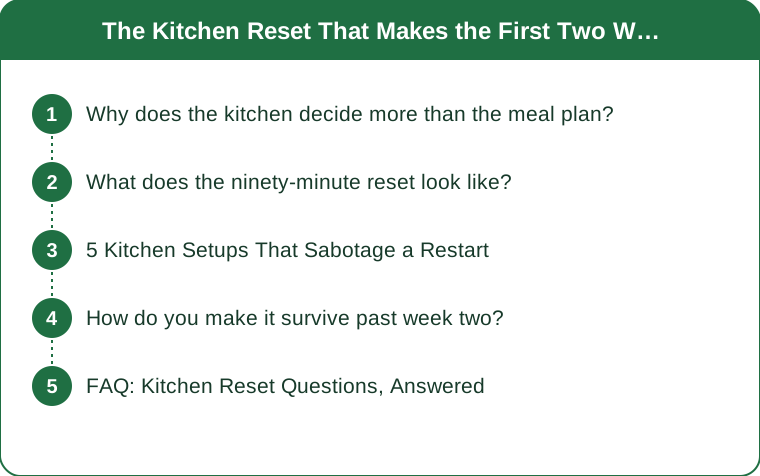
Why does the kitchen decide more than the meal plan?
Because the meal plan gets consulted twice a day and the kitchen gets consulted constantly.
Food decisions number in the dozens daily — the glance into the fridge, the counter graze, the pantry standing-stare — and the large majority run on autopilot rather than deliberation. Autopilot follows two laws with remarkable obedience.
Visible gets eaten. Sightlines drive consumption: the food you see every time you pass is the food that gets picked, which is why counter candy empties and crisper-drawer fruit liquefies forgotten. Out of sight is not a metaphor; it is functionally out of menu.
Easy gets eaten. Tiny effort differences swing choices absurdly — food you must unwrap, wash, or cook loses constantly to food that is open-and-eat, even when preference runs the other way. Thirty seconds of friction is a real price, paid or dodged dozens of times a week.
Now audit the default kitchen against those laws: engineered snacks arrive in grab-ready packaging and get stored at eye level, while produce arrives dirty and whole and gets stored in an opaque drawer at knee height. The environment is perfectly arranged to defeat the plan — and then the plan’s failure gets billed to character.
The reset simply runs the two laws in your favor. Same kitchen, same foods, same you — with the defaults now voting for the person you are trying to be, silently, at every glance. Willpower gets demoted from doorman on every decision to occasional supervisor, which is the only job it was ever any good at.
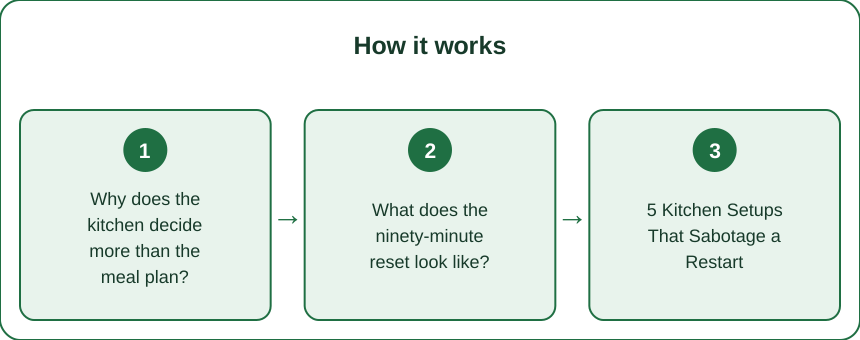
What does the ninety-minute reset look like?
Four moves, done once, in this order.
Move one: the eye-level audit — twenty minutes. Open the fridge and pantry and simply note what lives in the prime real estate: eye level, front row, counter. That inventory is your current default menu, and for most households the finding is immediate and a little rude. You are about to re-tenant it.
Move two: re-price the treats — twenty minutes. Nothing gets thrown away and nothing gets banned — prohibition backfires into rebound, and a reset that starts with a trash-bag purge usually ends at a drive-through. Instead, treats move into opaque bins on high or deep shelves: still fully available, now requiring a small deliberate act instead of a glance-and-grab. You are not restricting the food. You are removing its advertising and adding a two-step commute.
Move three: front-stage the intended defaults — thirty minutes. Wash the fruit now and stage it in a bowl where the candy sat. Prep vegetables into clear containers at fridge eye level — cut, visible, open-and-eat. Cook or buy one ready protein and park it front and center. Clear glass containers do for good food what the treat bins undo for the rest: visibility is now working both directions.
Move four: build the two stations — twenty minutes. A breakfast station — bowl, oats, protein powder, whatever your version is, grouped in one grab — deletes the day’s first decision, the one made at lowest willpower. A water station — filled bottle or pitcher, visible, at the front — quietly runs all day. Mornings also go smoother when the night before stages more than food: workout clothes laid out where you will see them — leggings, sports bra, socks — is the same defaults principle wearing activewear.
Ninety minutes, zero dollars, and the kitchen now argues your side.

5 Kitchen Setups That Sabotage a Restart
The counter as a snack billboard. Chips, cookies, and cereal boxes on the counter are impressions served dozens of times daily to the household’s autopilot. The counter is the single most valuable shelf in the kitchen — whatever sits there is being advertised, so cast it deliberately: fruit bowl, water pitcher, nothing else edible.
Produce buried in the crisper. The drawer is engineered for humidity and, functionally, for forgetting. Washed and staged at eye level gets eaten; drawered gets composted three weeks later with a small ceremony of guilt. Use the drawer for backstock, never for the working inventory.
The health-food graveyard shelf. The quinoa, the specialty flours, the aspirational supplements — bought in a motivated moment, shelved, expired. Its cost is not just money: a visible shelf of failed intentions is daily evidence against yourself. Cook it, gift it, or bin it, and stop stocking identity purchases you have no recipe for.
The all-or-nothing purge. Emptying every indulgence into a trash bag feels like commitment and functions as a countdown timer — total scarcity plus one hard day equals a rebound run to the store. Re-pricing beats removal precisely because it survives your bad days: the treat still exists, waits calmly in its bin, and one serving from a bin is a Tuesday, not a relapse.
Invisible water. Hydration is the most default-sensitive habit in the kitchen — a filled visible vessel gets drunk, an empty bottle in a cabinet does not, and the gap compounds across every appetite and energy decision downstream. If the reset only accomplishes one thing, let it be water you can see.
How do you make it survive past week two?
With one weekly ritual, one shopping rule, and permission for the system to wobble.
The Sunday fifteen-minute re-reset. Environments drift — treats creep back to eye level, the fruit bowl empties, containers migrate. A recurring quarter hour restores the layout: restage produce, refill stations, re-bin the drifters. This is maintenance of the machine that maintains you, and it is the entire ongoing cost.
Shop for the stations, not the aisles. The list writes itself from the layout: fruit-bowl stock, eye-level vegetables, one ready protein, breakfast-station refills, water on hand. Arriving with a station-shaped list also quietly reduces the impulse cargo, because you are restocking a system rather than browsing a mood.
Share the treaty, not the rules. In a shared kitchen, the reset survives only as a negotiation: housemates and kids keep their favorites — in the bins, on their shelves — and the shared sightlines stay neutral ground. You are not legislating anyone’s snacks; you are zoning the advertising space. Most households accept that trade without friction, especially when the fruit bowl is genuinely good.
Let adherence be graded, not binary. The system’s whole advantage is that it keeps working at partial power: a chaotic week where only the water station and fruit bowl survive is still a week the defaults leaned your way. Perfection is not load-bearing here — placement is.
And notice what the reset deliberately does not require: counting anything, forbidding anything, or feeling anything in particular at 9pm in front of the pantry. The first two weeks of a restart are won by the hundred small decisions you no longer have to make. Ninety minutes on a Sunday buys exactly that.
FAQ: Kitchen Reset Questions, Answered
Do I have to throw any food away?
No — the method is relocation and re-pricing, not purging. The exception worth making: anything already expired, and any single food you know from history you cannot keep in the house peacefully. That last call is self-knowledge, not doctrine; for most foods, the opaque high bin is enough.
What about my partner’s and kids’ snacks?
They keep them — in the bins or on shelves designated theirs, out of the shared sightlines. Frame it as zoning, not rules: nobody loses food, the counter and eye level just stop being ad space. Households mostly notice the staged fruit before they notice anything missing.
My kitchen is tiny with almost no counter — does this still work?
Better, arguably: small kitchens have fewer sightlines to manage, so each placement decision carries more weight. The fruit bowl and water vessel claim the one visible surface, the fridge’s eye-level shelf does the rest, and treats live in the one awkward cabinet every small kitchen has.
Does this replace meal prepping?
It underwrites it. Full meal prep is a further optimization; the reset is the floor that catches you when prep does not happen — which, in any honest fortnight, is often. Prepped meals plus staged defaults is the strong version; staged defaults alone still beats a plan on a whiteboard.
TL;DR:
- Dozens of daily food decisions run on autopilot, and autopilot obeys two laws: visible gets eaten, easy gets eaten — the default kitchen runs both against you.
- The ninety-minute reset: audit eye level, re-price treats into opaque bins without banning them, front-stage washed produce and ready protein, build breakfast and water stations.
- Avoid the saboteurs: counter snack billboards, crisper-buried produce, the aspirational graveyard shelf, the all-or-nothing purge, invisible water.
- Sustain it with a fifteen-minute Sunday re-reset, station-shaped shopping, and a household zoning treaty.
Set a timer for ninety minutes this Sunday. The version of you standing in front of the fridge on a tired Thursday will inherit every one of those minutes.
Keep Reading
This article is for general informational and styling purposes only. Fit, sizing, and product availability may vary.