The Weekend Problem: Why Saturday Undoes Tuesday (and the Fix)
Quick Answer: A 300-calorie daily weekday deficit builds to about 1,500 by Friday — which two unstructured weekend days can erase without ever feeling like a binge. The fix isn’t weekend restriction, it’s weekend structure: eat a real breakfast, treat meals as events rather than an all-day grazing state, pick one indulgence per day deliberately, and count drinks honestly. Then resume normal on Monday, not punitive.
The classic pattern has a rhythm you can set a watch by. Weekday discipline. Weekend amnesty. Monday guilt. Repeat.
And then the scale doesn’t move for two months, and the conclusion is usually “my metabolism is broken” or “I’m not trying hard enough” — when the actual explanation is arithmetic.
The fix isn’t weekend discipline. It’s weekend structure, which is a much friendlier thing than it sounds and doesn’t require declining a single invitation.

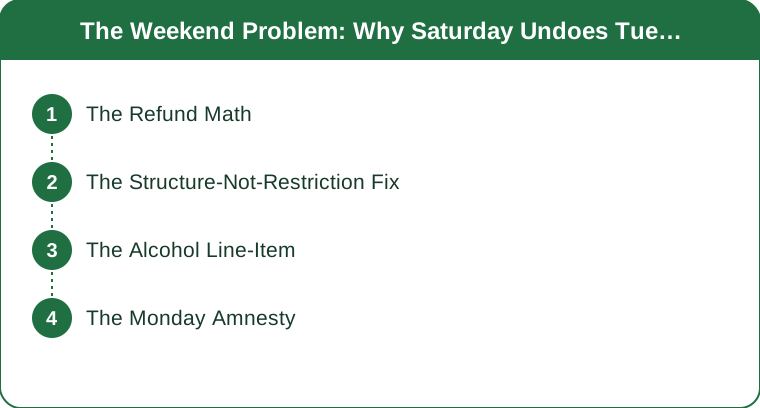
Why Do Weekends Undo a Whole Week of Progress?
Run the numbers and it stops being mysterious.
A modest, sustainable weekday deficit — say 300 calories a day — accumulates to roughly 1,500 by Friday evening. That’s real progress and it’s the right way to do it.
Now the weekend. Brunch instead of your usual breakfast, plus a couple of drinks Friday night, plus takeaway Saturday, plus grazing through Sunday afternoon. None of that has to be excessive. It just has to add up to about 750 extra calories a day, which is remarkably easy to reach.
Two days, 1,500 calories, deficit refunded. Net zero for the week.
The key insight: it never felt like a binge. That’s exactly why it’s invisible. Nobody remembers a weekend of reasonable meals as the reason a plateau happened.
The plateau wasn’t weekday failure. It was accounting across all seven days, and only five of them were being counted.
The Structure-Not-Restriction Fix
Weekends keep their joy and gain a skeleton. Three rules, none of them about restriction.
Eat a real breakfast. This is the highest-leverage single change. Weekend mornings often start with nothing, then coffee, then it’s 1pm and you’re eating whatever’s nearest. A proper breakfast with protein — 25–30g — prevents the grazing pattern that follows a delayed first meal.
Make meals events, not permanent states. The all-day nibble is the silent refund engine. A weekend where you eat three defined meals plus a snack costs dramatically less than one where you’re never quite eating and never quite not. Sit down, eat, finish, and be done until the next one.
Pick your indulgence. The brunch or the dessert or the cocktails — chosen deliberately in advance and enjoyed completely. Not all three by accident. This is the rule that preserves the actual pleasure of a weekend, because a chosen indulgence is enjoyed and an accidental one is barely noticed.
Notice what’s not on this list: skipping the brunch, ordering the salad, declining the invitation. Structure isn’t restriction, and the version that survives is the one you don’t resent.

The Alcohol Line-Item
Weekend drinks are the invisible column in the spreadsheet, and they bill three times.
The direct cost. A glass of wine is roughly 125 calories, a beer around 150, a cocktail with mixers often 250–350. Three drinks is comfortably 500–700 calories that register as almost nothing.
The judgment cost. Alcohol reliably reduces dietary restraint. The 11pm decision that seemed reasonable is a decision you’d have made differently sober, and it usually costs more than the drinks did.
The next-day cost. Poor sleep from alcohol raises next-day hunger hormones and drives exactly the carb-seeking that fills Sunday. This is the largest of the three and the one nobody counts.
The tactics that keep the social without the triple bill: alternate every drink with a glass of water, choose spritzers over cocktails (a wine spritzer is roughly half a glass of wine), eat properly before rather than during, and set a number before you arrive rather than deciding in the moment.
This one line-item explains a startling share of mystery plateaus.
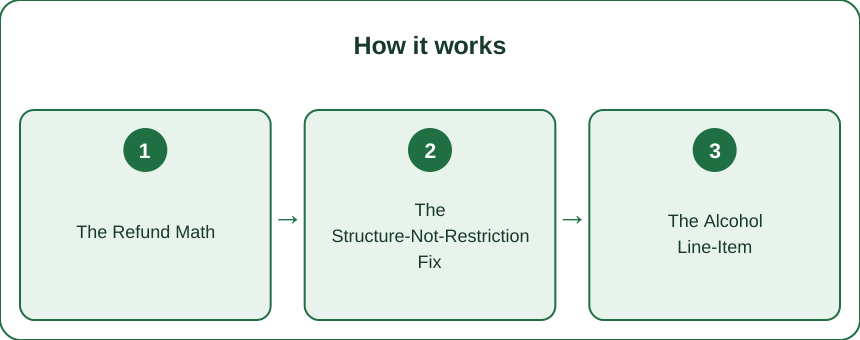
The Monday Amnesty
Here’s the part that’s actually the engine of the whole cycle.
Guilt-driven Monday restriction — the skipped breakfast, the 1,200-calorie penance, the “I’ll make up for it” week — creates deprivation that fuels the next weekend’s rebound. You’re not correcting the cycle; you’re funding it.
The fix: Monday resumes normal, not punitive. The week’s plan was fine. It didn’t need fixing. It needed the weekend to stop refunding it.
Seven-day consistency at 80% beats the 100%-to-0% oscillation every single time it’s tried. It’s less dramatic, less satisfying to announce, and considerably more effective.
Practically: step on the scale Monday if you weigh yourself, note the number without reacting to it, eat your normal Monday breakfast, and continue. A two-pound Monday jump is water and food volume, not fat — fat math doesn’t move that fast.
5 Mistakes Everyone Makes
- Skipping breakfast to “save calories” for brunch. Arriving at brunch genuinely hungry reliably costs more than the breakfast would have.
- Not logging weekends. If you track during the week and stop Friday night, you’ve removed the two days that most need visibility. Even rough logging changes behavior.
- Treating Saturday and Sunday as one continuous event. Two separate days with two separate plans is far more manageable than a 48-hour block of amnesty.
- Compensating with punishing Monday workouts. Exercise as penance is both ineffective at the calorie math and corrosive to your relationship with training.
- Aiming for a perfect weekend. A weekend at 80% of your intentions, every weekend, outperforms one perfect weekend followed by three abandoned ones.
Mini FAQ
Is it okay to have a cheat day on the weekend?
A planned, single-meal indulgence is fine and often helps adherence. A full cheat day frequently erases most of a week’s deficit — the term makes it sound like a small allowance when the arithmetic says otherwise. Pick a meal rather than a day.
How much can one weekend really set you back?
Two days of roughly 750 extra calories each cancels a 300-per-day weekday deficit entirely. That’s not a dramatic weekend — it’s brunch, a few drinks, and a takeaway. It won’t cause weight gain, but it will hold you flat indefinitely.
Should I weigh myself on Mondays?
If daily weighing works for you, keep it up including Mondays — but read weekly averages, not single days. A Monday reading is inflated by sodium and food volume from the weekend and tells you nothing about fat. If a high Monday number derails your week emotionally, weigh on Wednesdays instead. And if any of this starts feeling compulsive or distressing, that’s worth talking through with a doctor or registered dietitian.
TL;DR:
- A 300/day weekday deficit is ~1,500 by Friday; two ordinary weekend days can refund all of it.
- Real breakfast with 25–30g protein is the single highest-leverage weekend change.
- Meals as events, not an all-day grazing state. Pick one indulgence per day deliberately.
- Alcohol bills three times: calories, lost restraint, next-day hunger. Alternate with water, set a number in advance.
- Monday resumes normal, not punitive. Guilt-restriction is what fuels the next rebound.
Breakfast anchors, chosen indulgences, drinks counted honestly, Mondays normal. The weekend was never the enemy — the missing structure was, and structure travels fine in brunch clothes.
Keep Reading
This article is for general informational and styling purposes only. Fit, sizing, and product availability may vary.