The First Two Weeks of Weight Loss Are Mostly Water — and Why Knowing This Saves Your Diet
Quick Answer: The thrilling 2-4kg drop in weeks 1-2 is mostly water: cutting calories (especially carbs) depletes glycogen, which releases the ~3g of water stored with every gram of it. Week 3’s ‘crash’ to 0.25-0.75kg per week isn’t your diet failing — it’s water noise ending and actual fat-loss speed becoming visible. The people who quit at week 3 quit at the exact moment real progress became measurable.
Every diet has the same emotional arc: euphoria at the week-one whoosh, quiet pride at week two, and existential doubt at week three when the scale slows to a crawl on the identical routine. The routine didn’t change — the physics just finished its opening act.

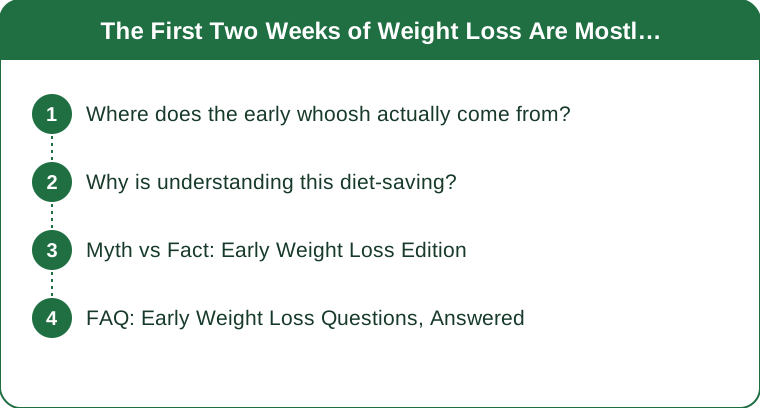
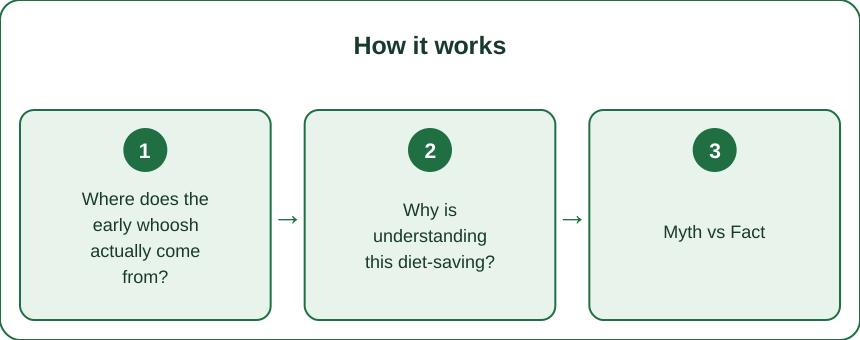
Where does the early whoosh actually come from?
Three water reservoirs drain in weeks 1-2:
- Glycogen water (the big one): your muscles and liver store carbohydrate as glycogen — several hundred grams of it — and each gram holds roughly 3 grams of water. A calorie deficit (especially with fewer carbs) taps those stores, and the water ships out with them: 1.5-3kg of scale weight that was never fat.
- Sodium-shift water: diets that swap processed food for home cooking slash sodium — and lower sodium means less retained fluid, another quick kilogram for many.
- Gut contents: eating less volume simply means less in-transit mass at any weigh-in moment. Unglamorous, real, and also not fat.
Actual fat loss in those same weeks? Present and normal — at roughly the rate a sensible deficit produces: ~0.25-0.75kg weekly. It was just hiding inside a much larger water story, like a steady drumbeat under a fireworks show.
Why is understanding this diet-saving?
Because the misread at week 3 is the classic quit trigger:
The wrong story: ‘I lost 2kg a week at first, now 0.4kg — my metabolism crashed / the diet stopped working / I need something stricter.’ This story leads to slashing calories harder (unsustainable), program-hopping (resetting the water cycle each time — which is exactly why serial diet-switchers keep experiencing thrilling first weeks), or quitting.
The right story: ‘The water chapter ended; 0.4kg weekly IS the fat-loss speed, was all along, and it’s exactly on target.’ This story leads to… continuing. Which is the entire game.
The expectation calibration to install on day one: weeks 1-2 are a physics prologue — the diet’s true pace appears at week 3, and that pace is the one to judge. Bonus insurance: measure waist and take photos at day zero, because when the scale enters its boring era, the tape keeps reporting fat-specific progress the water noise can’t touch.

Myth vs Fact: Early Weight Loss Edition
Myth: The week-3 slowdown means your metabolism ‘adapted’ and stalled. Fact: Metabolic adaptation is real but modest and gradual — the week-3 cliff is water accounting ending, not your metabolism collapsing on schedule. (True plateaus — 3-4+ weeks of nothing on honest adherence — have their own checklist, later in the journey.)
Myth: Regaining 1-2kg after one indulgent weekend means the fat came back. Fact: Same physics in reverse — refilled glycogen and sodium bring their water home. Fat regain requires a sustained surplus of thousands of calories; a salty carby weekend restores water weight that will leave again within days of resuming. The Monday scale after a wedding is reporting hydration, not failure.
Myth: A faster whoosh means a better diet. Fact: Aggressive low-carb openings produce the biggest water drops — impressive, and largely refundable on the first normal-eating week. Comparing diets by week-one numbers is comparing them by their water chemistry, not their sustainability or fat-loss math.
The pattern: nearly every early-diet emotional whiplash — the euphoria, the crash, the weekend panic — is water physics being mistaken for verdicts. This is general information, not medical advice.
FAQ: Early Weight Loss Questions, Answered
What’s a realistic ongoing rate after the water chapter?
Common sustainable territory: 0.25-0.75kg (0.5-1% of bodyweight) weekly, slower for lighter people and gentler deficits. Judged as a 3-4 week trend of weekly averages — single weigh-ins stay noisy forever.
Should I weigh daily or weekly?
Either works with the right processing: daily-weights-weekly-average smooths the noise best (and desensitizes the daily number’s drama); a single weekly weigh-in (same morning, same conditions) suits people the daily number stresses. The veto rule from recomp applies here too: the scale gets a vote, not the verdict.
Does the water weight ever ‘come back’ while dieting?
Fluctuations visit constantly — salty meals, cycle phases, hard workouts (muscle repair holds water), travel. Expect 1-2kg oscillations around a declining trend line, and read the line, not the oscillations. A flat month on honest adherence is a real checkpoint worth troubleshooting; a flat Tuesday is Tuesday. This is general information, not medical advice.
TL;DR:
- Weeks 1-2 = glycogen water (~3g water per gram), sodium shifts, and gut contents — the fat-loss drumbeat (0.25-0.75kg/wk) was underneath all along
- Week 3’s ‘crash’ is water noise ending — the moment real progress becomes measurable is the moment most people quit
- Post-weekend jumps are water refilling, refundable within days; fat regain needs sustained surplus
- Install day-zero tape measurements and photos as scale-noise insurance; judge 3-4 week trends only
The fireworks were never the show — the drumbeat was, and it never stopped playing. This is general information, not medical advice.
Keep Reading
This article is for general informational and styling purposes only. Fit, sizing, and product availability may vary.