Keeping It Off: The Maintenance Skills That Matter More Than the Loss
Quick Answer: Keeping weight off comes down to four learnable habits: high daily movement, light weekly self-monitoring, reasonably consistent eating across weekdays and weekends, and fast recovery from lapses. Define a 3–5 lb action band in advance and pre-write what you’ll do when you hit it — rigidity predicts regain more reliably than indulgence does.
Losing the weight is the semester. Keeping it off is the career.
Most people plan the semester in enormous detail and plan the career not at all — which is why the finish line so often turns out to be the starting gun for regain. The maintenance research is refreshingly blunt about what separates the keepers from the regainers, and none of it is glamorous.

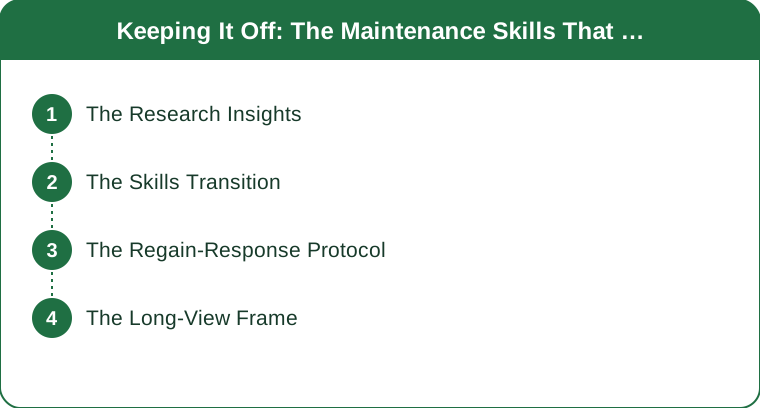
What Do People Who Keep Weight Off Actually Do?
Long-running studies of successful maintainers converge on a boring, consistent picture. That convergence is the headline.
They move a lot, every day. Not necessarily hard training — total daily movement, including walking and general activity. Notably, exercise appears to matter more for maintenance than for loss, which is the reverse of how most people treat it.
They keep monitoring, lightly. A weekly weigh-in or measurement, not a daily obsession. The purpose isn’t judgment; it’s early detection. A 4 lb drift caught in week three is a small correction. Caught in month eight, it’s a project.
They eat with reasonable consistency. Weekdays and weekends don’t look wildly different. This is one of the clearest differentiators in the data — the “perfect Monday to Thursday, wide-open Friday to Sunday” pattern quietly erases a week’s deficit.
They recover from lapses fast. This one deserves emphasis: rigidity predicts regain more strongly than indulgence does. Maintainers treat an off-plan meal as one meal. Regainers treat it as evidence the whole thing has collapsed, and then it does.
And one piece of honesty: the post-loss body is genuinely different. Appetite hormones shift, and energy expenditure runs somewhat lower than in someone who never lost the weight. This is real, it’s not a character flaw, and it does ease over the years — but it means maintenance takes more intentionality than never having lost. Naming that is what stops it from being demoralizing.
How Do You Transition From Losing to Maintaining?
Six moves, and the first one is where most people go wrong by rushing.
1. Close the deficit gradually. Don’t jump from a deficit straight to eating freely. Add roughly 100 calories per week while watching your weight trend over 2–3 weeks. You’re discovering your actual maintenance level with data rather than trusting a calculator’s estimate.
2. Shift the identity. “I’m someone who reached a goal” has a finish line built into it. “I’m someone who moves daily and eats mostly like this” doesn’t. The finish-line mindset is the regain setup.
3. Audit your loss-phase habits. Sort them into two piles: things you could genuinely do forever, and white-knuckle tactics you were enduring. Keep the first pile, retire the second. A diet that required misery to sustain is a diet that predicts regain.
4. Prioritize strength work. Maintenance is where muscle gets defended — and where body recomposition actually happens best, since you’re no longer fighting a deficit. Two to three lifting sessions a week protects the metabolic engine you spent months building.
5. Design a weekly structure that runs itself. Anchor habits on the calendar: training slots, a prep block, a weigh-in ritual. Structure beats motivation because it doesn’t need you to feel like it.
6. Rebuild pleasure deliberately. Reintegrate foods and occasions on purpose. A maintenance plan that includes birthday cake by design is one you’ll still be running in five years. An 80/20 pattern isn’t a compromise — it’s the permanent version.

What’s Your Regain-Response Protocol?
Write this before you need it, because you will not think clearly in the moment.
Set an action band. Pick a personal range — commonly 3–5 lb (1.5–2.5 kg) above your maintenance point. Inside the band is normal fluctuation; ignore it. Crossing the band triggers the plan.
Pre-decide the response menu. Small levers pulled early:
- Reinstate a tracking week
- Close the kitchen after dinner
- Restore your step count to its usual number
- Re-anchor protein at each meal
Include the no-panic clause. Drift gets met with the checklist, not a crash diet. An aggressive re-cut is how people fall into the restrict-binge cycle, and it damages the relationship with food that maintenance depends on. Gentle correction, applied early, beats dramatic correction applied late.
Be honest about life seasons. Injury, pregnancy, grief, a job in chaos — during these, widen the band deliberately rather than abandoning the effort. A defended middle beats a collapsed plan every time.
Audit annually. Once a year, review the weight trend, the habits, and whether the plan still fits your actual life. Life changes; the plan should too.
Keep your support. The single most common structural mistake is letting accountability end at the goal — the buddy, the community, the check-ins all quietly stop right when they matter most.
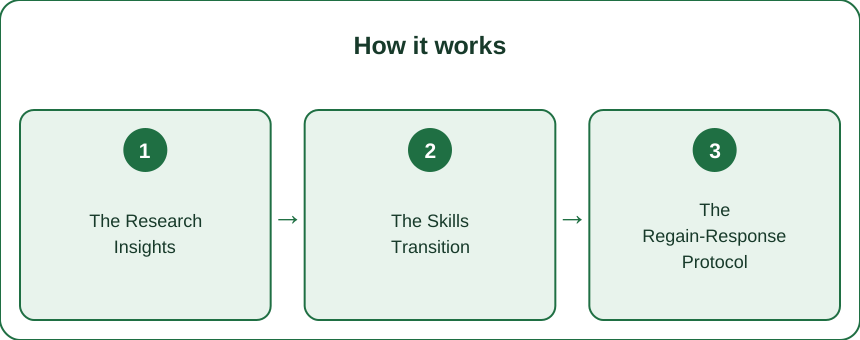
What Nobody Tells You About Maintenance
Success is a band, not a number. Holding a stable range is complete success. Scale-perfect stasis isn’t anyone’s biology — daily weight swings of 2–4 lb from water, sodium, and glycogen are normal and mean nothing.
Weight is one gauge among several. Energy, strength numbers, bloodwork, and how your clothes fit are all part of the dashboard. Some of the best maintenance years show a flat scale and a substantially different body.
Your toolkit is real expertise. Appetite management, habit architecture, fast recovery from a bad week — these are genuine skills most people never build. Own that.
Vigilance without anxiety is the destination. Maintaining a body from care rather than fear is the version that lasts. Food peace and maintenance aren’t in conflict; long-term, they’re the same thing.
A note on scope: this is general guidance, not medical advice. If you’re managing diabetes, thyroid disease, an eating disorder history, or you’re on medication that affects weight, work with your doctor or a registered dietitian on your maintenance plan specifically.
Move daily, monitor lightly, respond early, live fully. The loss was the entrance exam. The career is underway.
Mini FAQ
How long does weight maintenance stay hard?
The hormonal and metabolic adaptations are strongest in the first year and generally ease with time, though many maintainers report needing somewhat more attention indefinitely. Most people find the habits become automatic well before the biology fully settles.
How often should I weigh myself during maintenance?
Weekly is the sweet spot for most people — frequent enough to catch drift early, infrequent enough to avoid reacting to normal daily swings. Some do well with daily weighing plus a weekly average; use whichever you can do without distress.
What should I do after a vacation or a bad week?
Return to your normal pattern at the very next meal, not next Monday. Then run your response checklist for a week — tracking, steps, protein — and let the scale settle for 7–10 days before judging anything.
TL;DR:
- Maintainers converge on boring habits: high daily movement, weekly monitoring, consistent-ish eating, fast lapse recovery.
- Rigidity predicts regain more than indulgence — a diet that required misery won’t hold.
- Close the deficit at ~100 cal/week, keep lifting, and shift from a finish line to an identity.
- Define a 3–5 lb action band and pre-write your response menu. No crash diets.
- Success is a band, not a number — and see a doctor or dietitian if you have a relevant medical history.
Keep Reading
This article is for general informational and styling purposes only. Fit, sizing, and product availability may vary.