Why the Number on the Scale in the First Two Weeks of a New Plan Is Often Misleading
The scale often drops fastest in the first two weeks of a new eating plan, which feels like strong early proof it’s working, but most of that early movement isn’t fat loss at all — it’s water and stored glycogen shifting in response to the change, and it sets an expectation the rest of the plan won’t match.

Why Early Drops Are Mostly Water and Glycogen
The composition: cutting-carbohydrates-or-calories-depletes-stored-glycogen-which-is-bound-to-several-times-its-own-weight-in-water-producing-a-fast-early-drop-unrelated-to-fat (cutting carbohydrates or overall calories depleting stored glycogen, which is chemically bound to several times its own weight in water, producing a fast early scale drop that has almost nothing to do with actual fat loss, per the the-first-two-weeks-are-not-the-signal-guide logic — cutting-carbohydrates-or-overall-calories-depleting-stored-glycogen-which-is-bound-to-several-times-its-own-weight-in-water-producing-a-fast-early-drop-that-has-almost-nothing-to-do-with-actual-fat-loss), and the reframe (an early number driven by a chemical bond, not by stored fat coming off)).

Why That Early Number Sets an Unrealistic Expectation
The setup: a-fast-initial-drop-anchors-an-expectation-for-the-rate-of-loss-that-genuine-fat-loss-later-in-the-plan-simply-cannot-match-once-glycogen-stores-are-already-depleted (a fast initial drop anchoring an expectation for the ongoing rate of loss that genuine fat loss later in the plan simply cannot match, once glycogen stores are already depleted and can’t be depleted again, per the weight-loss-plateau-honest-guide logic — a-fast-initial-drop-anchoring-an-expectation-for-the-ongoing-rate-of-loss-that-genuine-fat-loss-later-cannot-match-once-glycogen-stores-are-already-depleted-and-cant-be-depleted-again), and the frame (a one-time chemical event being mistaken for the plan’s actual ongoing rate)).
How to Judge a Plan by Its Trend After Week Three
The correction: start-evaluating-a-plans-actual-effectiveness-from-roughly-week-three-onward-once-water-shifts-have-stabilized-and-the-trend-reflects-real-fat-loss (starting to evaluate a plan’s actual effectiveness from roughly week three onward, once water and glycogen shifts have stabilized and the ongoing trend reflects real fat loss rather than a one-time depletion event, per the non-scale-victories-guide logic — starting-to-evaluate-a-plans-actual-effectiveness-from-roughly-week-three-onward-once-water-and-glycogen-shifts-have-stabilized-and-the-ongoing-trend-reflects-real-fat-loss), and the frame (moving the judgment window past the noisy opening weeks).
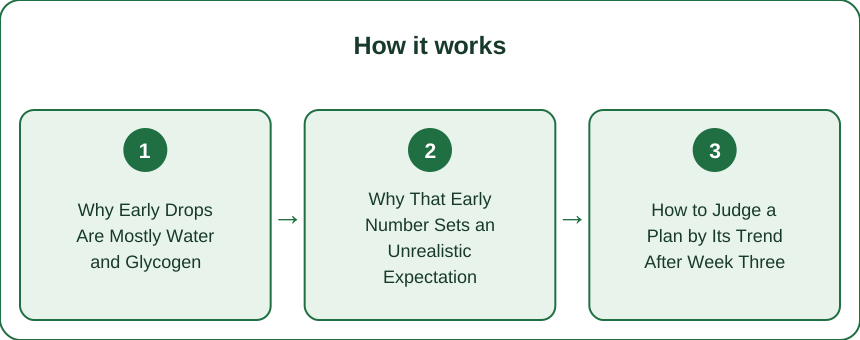
Cutting carbohydrates or overall calories depletes stored glycogen, which is chemically bound to several times its own weight in water, producing a fast early scale drop that has almost nothing to do with actual fat loss, and that drop anchors an expectation for an ongoing rate that real fat loss later in the plan simply can’t match. Starting to evaluate a plan’s actual effectiveness from roughly week three onward, once those water shifts have stabilized, judges the plan by a trend that actually reflects fat loss.
Keep Reading
This article is for general informational and styling purposes only. Fit, sizing, and product availability may vary.