Walking for Weight Loss: The Underrated Plan That Works
Quick Answer: Walking works for weight loss because it’s sustainable daily — a brisk hour burns roughly 250–350 calories without spiking hunger or requiring recovery. Aim for 8,000–12,000 steps a day, built up gradually from your current baseline, add hills or a weighted pack to increase the burn, and pair it with modest changes at the plate. The walking creates the deficit; the kitchen protects it.
While the internet argues about optimal training splits, walking quietly remains one of the most effective fat-loss tools ever invented — and the least discussed, because nobody can sell you a subscription to it.
No gym. No recovery days. No week three where you decide you hate this.
Here’s how to make walking genuinely work for weight loss, rather than just accumulating steps and wondering why nothing moved.

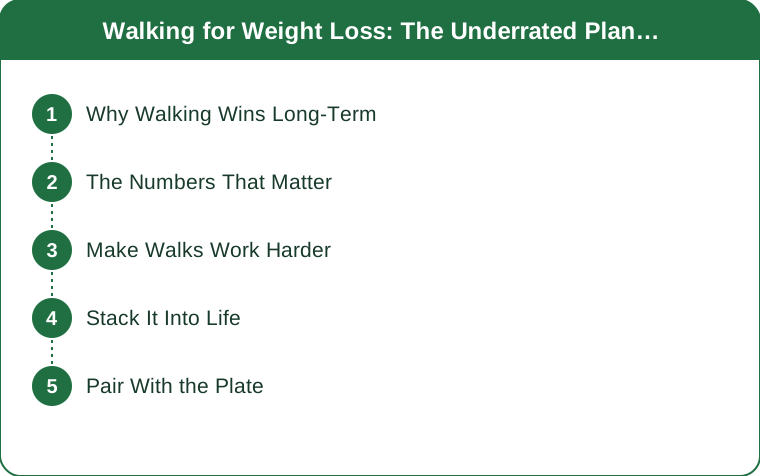
Why Does Walking Beat Harder Workouts for Fat Loss?
Not because it burns more per session — it doesn’t. Because you’ll actually keep doing it.
Three specific advantages:
It doesn’t spike hunger the way hard cardio does. High-intensity sessions frequently drive a compensatory appetite response that quietly eats the deficit you just created. Walking’s appetite effect is much smaller.
It requires no recovery. You can walk every day, indefinitely. A hard training session you can do three times a week generates a deficit three times a week; a walk generates one seven times.
It doesn’t crush your NEAT. After an exhausting workout, people move less for the rest of the day — sitting more, taking the lift, skipping the errand. Walking leaves your non-exercise activity intact, and non-exercise movement is a bigger share of daily burn than most people expect.
Adherence beats intensity over months. The best plan is the one that never gets abandoned.
How Many Steps Do You Actually Need?
Target 8,000–12,000 steps a day, but the number that matters most is your current baseline plus 2,000.
Here’s the honest math. A brisk 60-minute walk burns roughly 250–350 calories for most adults, varying with bodyweight and pace. Daily, that’s around 1,750–2,450 a week — a genuine, meaningful deficit contribution without a single burpee.
The build:
- Week 1: measure only. Wear the tracker, change nothing, find your real baseline. Most people overestimate by a lot.
- Weeks 2–3: baseline + 2,000. That’s roughly 20 extra minutes.
- Weeks 4–6: baseline + 4,000, or wherever 8,000 lands for you.
- Then hold. Consistency at 9,000 beats a heroic 15,000 on Sunday and 3,000 the rest of the week.
Pace matters too. “Brisk” means you can talk but not sing — roughly 3.5–4 mph, or a cadence around 100–120 steps per minute.

How Do You Make Walks Burn More?
Same time investment, better returns:
- Hills or treadmill incline. A 5–10% incline can raise energy cost substantially without adding impact. It’s the single best upgrade available.
- Rucking. A backpack at 10–20% of bodyweight increases the burn and adds a genuine strength stimulus to the posterior chain. Start light and keep the load high on your back.
- Intervals. Three minutes brisk, two minutes easy, repeated. Raises average intensity without making the whole walk feel hard.
- Arms and posture. Swing your arms, walk tall, drive from the hips. It’s not decorative — it raises the energy cost and it makes you look like you have somewhere to be.
- Terrain. Trails, sand and grass all demand more stabilisation than flat pavement.
What not to do: ankle weights. They alter your gait mechanics and load your joints in ways that aren’t worth the marginal burn.
5 Mistakes Everyone Makes With Walking for Weight Loss
- Strolling and calling it training. A slow amble with three stops is lovely and barely registers. Pick a pace where conversation gets slightly effortful.
- Rewarding the walk with food. A 300-calorie walk followed by a 400-calorie “earned” coffee is arithmetic working against you.
- Trusting the calorie readout. Trackers routinely overestimate walking burn. Use the trend, not the number.
- Going all-or-nothing. Missing a 10,000-step day and therefore doing zero is the most common failure. Ten minutes still counts. The third mistake is the one that stalls progress; this one is what ends the whole project.
- Ignoring strength entirely. Two short resistance sessions a week protect muscle while you lose fat, and muscle is what keeps the loss from coming back.
How Do You Fit the Steps Into a Real Day?
Weight loss hides in transit choices. You almost never need to find a spare hour — you need to find six spare ten-minute windows.
- Walk during phone calls. Meetings that don’t need a screen are free steps.
- The 10-minute post-meal walk. Particularly good for blood sugar, and three of them equal one thirty-minute session.
- Errands within a mile. Walk them. Add a backpack and it’s a ruck.
- Park at the far end, get off a stop early, take the stairs. Individually trivial, collectively a couple of thousand steps.
- Walk while your podcast queue empties. People consistently report the audio is what makes the habit stick.
What About Food?
The walking creates the deficit. The kitchen decides whether it survives.
You don’t need a diet overhaul — the modest version works: protein at every meal (roughly 20–30 g, which helps with fullness and protects muscle), vegetables filling half the plate, and honest portions on the things that are easy to over-serve.
That’s it. Walking plus modest eating changes is quietly one of the most durable fat-loss combinations there is, precisely because neither half requires willpower you won’t have in March.
When to see a professional: chest pain, unusual breathlessness, dizziness on exertion, or joint pain that worsens with walking all warrant a doctor. So does rapid unintended weight loss, or starting an exercise programme with an existing cardiac or metabolic condition.
How many steps a day to lose weight?
8,000–12,000 is the practical target range for most people, but build there gradually from your measured baseline. Adding 2,000 steps a day to whatever you currently do is a better starting instruction than chasing a round number.
How long does it take to see results from walking?
Expect measurable change over 6–12 weeks with consistent daily walking and modest eating changes. Weekly weight fluctuates for reasons unrelated to fat, so judge by the four-week trend, how clothes fit, and energy levels rather than any single morning’s number.
Is walking better than running for weight loss?
Running burns more per minute; walking is more sustainable and less likely to be abandoned or interrupted by injury. For most people trying to lose weight over months rather than weeks, the one they’ll do daily wins.
TL;DR:
- Walking wins on adherence — no recovery needed, minimal hunger spike, daily-repeatable.
- A brisk hour burns roughly 250–350 calories; target 8,000–12,000 steps.
- Measure your baseline first, then add 2,000 steps at a time.
- Upgrade with hills, rucking (10–20% bodyweight) and intervals — skip ankle weights.
- Stack it into life: calls, post-meal 10-minutes, errands under a mile.
- Add protein at meals and two short strength sessions a week to protect the result.
Keep Reading
This article is for general informational and styling purposes only. Fit, sizing, and product availability may vary.