Hit a Weight Loss Plateau? Here's How to Break Through
Quick Answer: A plateau is normal biology, not failure — a smaller body burns fewer calories, so the deficit that used to work stops working. The fix is a set of adjustments, not a punishment: honestly re-check intake for a few days, add strength training, track non-scale progress, and protect sleep and stress, which affect this more than most people expect.
You were making progress. The scale moved every week. And then it simply stopped.
Weight loss plateaus are one of the most common and most demoralizing experiences in the whole process, and almost everyone hits at least one.
It isn’t a sign you’ve failed. It’s a sign your body has adapted — and you can adapt right back.

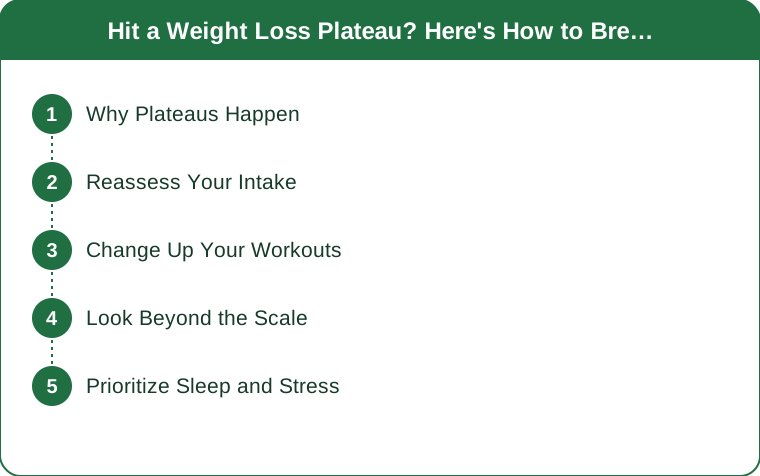
Why Do Plateaus Happen at All?
Because a smaller body costs less to run.
As you lose weight, your maintenance calories drop — there’s less tissue to fuel and less mass to move. The deficit that produced a steady loss six weeks ago is now a much smaller deficit, and eventually it becomes no deficit at all.
That’s arithmetic, not a personal failing. Nothing has gone wrong.
There’s usually a second factor stacked on top: portion creep. Over weeks, servings quietly expand, snacks stop getting counted, and the cooking oil goes back in by eye. Neither of these is a moral issue; both are just measurable.
One important caveat before you change anything: two flat weeks is not a plateau. Water retention from a hard workout, a salty meal, hormonal cycles, or an unusually full digestive system can mask several weeks of real fat loss. Give it three to four weeks of a flat trend before you act.
How Should You Re-Check Your Intake?
Track honestly for three to five days — including weekends, which is where most of the gap lives.
Look specifically at:
- Cooking oils and fats. A tablespoon of olive oil is around 120 calories, and most people pour two.
- Liquid calories. Coffee drinks, juice, alcohol. Easy to consume, easy to omit from a mental tally.
- Bites while cooking. Genuinely invisible, genuinely add up.
- Weekend variance. Two relaxed days can erase five careful ones.
You’re not looking for something to feel bad about. You’re looking for the gap between what you think you’re eating and what you’re eating, which is normal and almost universal.
If your maintenance has dropped, the adjustment is usually modest — a 100–200 calorie reduction, or an increase in daily movement, rather than a dramatic cut.

What Should Change in Your Training?
Add strength training if it isn’t there already. This is the highest-value change on the list.
Muscle is metabolically active, and more importantly, resistance training protects the muscle you already have during a deficit — which is what keeps your maintenance calories from falling faster than they need to. Two or three sessions a week is enough.
Increase daily movement, not just workout intensity. Non-exercise activity — walking, standing, fidgeting — often drops quietly during a long deficit, and it’s a bigger share of daily burn than most people realize. An extra 2,000 steps costs nothing in recovery.
Change the stimulus. Bodies get efficient at familiar work. New movements, heavier loads, or different intervals re-challenge systems that have settled in.
What’s not the answer: doubling cardio while eating less. That accelerates the adaptation you’re trying to fight and usually ends in burnout.
What Should You Measure Besides the Scale?
This matters more during a plateau than at any other time, because the scale is the one metric that’s currently stuck.
- Body measurements — waist, hips, thighs. Recomposition shows here first.
- How clothes fit. Genuinely informative and completely free.
- Strength in the gym. Adding weight to a lift during a deficit is a real win.
- Photos, monthly, same lighting. Change you can’t see day to day is obvious across eight weeks.
- Energy, sleep quality, resting heart rate.
If the scale is flat but the waist is shrinking and your lifts are climbing, you are not plateaued. You’re recomposing, which is the better outcome anyway.
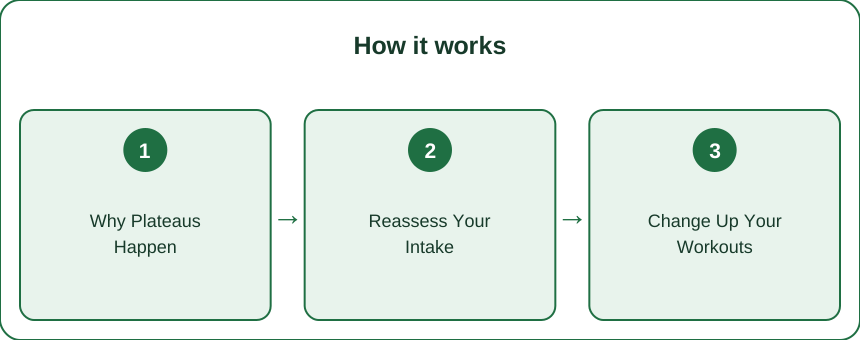
Do Sleep and Stress Really Matter That Much?
More than most people expect, and they’re the two most commonly ignored variables.
Short sleep disrupts appetite regulation — hunger goes up, satiety goes down, and cravings for high-calorie food increase. It also reduces workout quality and tends to cut daily movement.
Chronic stress raises cortisol, which drives fluid retention and can mask fat loss on the scale for weeks. It also makes adherence much harder, which is the real mechanism.
If you’re sleeping six hours and running at high stress, that’s likely the highest-leverage fix available — higher than another 100-calorie cut.
5 Mistakes Everyone Makes
- Calling two flat weeks a plateau. Give it three to four weeks of trend data.
- Cutting calories dramatically. A steep cut accelerates adaptation and rarely holds.
- Adding cardio while cutting food. Both levers at once is how people end up exhausted and stalled.
- Skipping strength training. The single most protective thing you can do during a deficit.
- Weighing once a week on a random morning. Daily weigh-ins averaged weekly give a far clearer signal than single data points.
FAQ
How long does a plateau usually last?
Several weeks is common. If a genuine stall persists past six to eight weeks with intake and activity unchanged, that’s the point to make a deliberate adjustment rather than wait it out.
Should I try a diet break?
Many people find a one- to two-week period at maintenance calories helps — psychologically and with adherence — before resuming a deficit. It’s not magic metabolically, but it makes the long haul more sustainable.
Is the scale stalling ever a good sign?
It can be. If you’re gaining muscle while losing fat, scale weight stays flat while your body composition improves. Measurements and strength numbers are how you tell the difference.
When should I talk to a professional?
If you’ve been in a deficit for a long time, if weight loss stalls alongside fatigue or other symptoms, or if food and the scale are occupying more mental space than you’d like — a registered dietitian or your doctor is the right next step.
TL;DR:
- A smaller body needs fewer calories — plateaus are arithmetic, not failure
- Two flat weeks isn’t a plateau; look for three to four weeks of flat trend
- Re-check intake honestly for 3–5 days, weekends included
- Adjust modestly: 100–200 calories or more daily movement, not a dramatic cut
- Add strength training — it protects muscle and slows metabolic adaptation
- Track waist, clothes, lifts, and monthly photos, not just the scale
- Sleep and stress are often the highest-leverage fix
- Don’t slash food and add cardio at the same time
A plateau is a signal to adjust, not a verdict. Respond thoughtfully instead of giving up, and progress starts again.
This is general information, not medical advice. If you have a health condition, take medication that affects weight, or have a history of disordered eating, work with your doctor or a registered dietitian on any changes.
Keep Reading
This article is for general informational and styling purposes only. Fit, sizing, and product availability may vary.